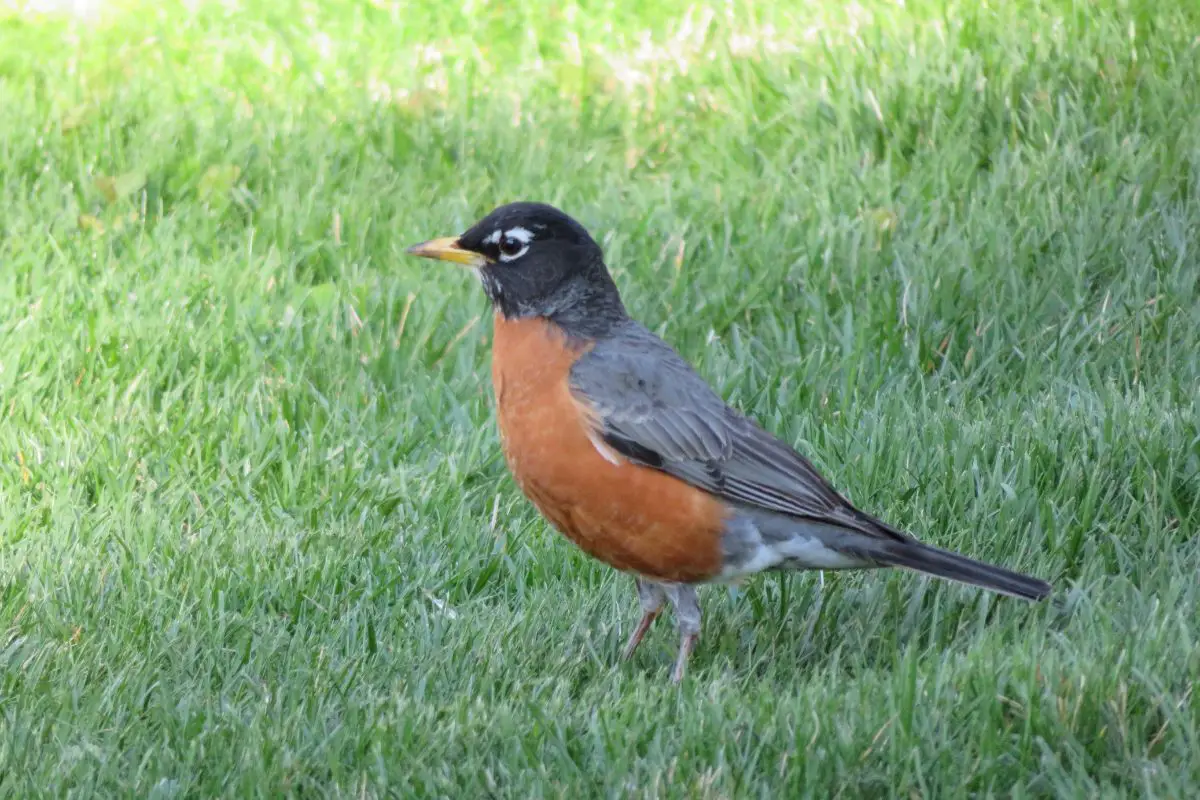
One of the most welcome appearances every spring, especially in the Eastern and Mid-Atlantic states, is that of the American Robin. The bright red chest of this bird searching for earthworms lets us know that warmer weather is on the way. For people who aren’t avid birders, there is the chance of mistaking several other species of bird for the robin, often because they merely spot the red or orange coloring.
Let’s take a look at the robin and then we will explore some birds that may be mistaken for the robin.
The Robin
There are 65 species of robins, who are members of the thrush family, a family that also includes bluebirds and blackbirds. The American Robin is the most common and is also one of the most common in the entire United States. These birds migrate as far south as Mexico and Central America in the winter months and are among the first to return each spring.
These are solitary birds who do not usually live or travel in flocks. They can become aggressive about their territory when they are nesting but are normally fairly docile. The robin is mainly brown with touches of white on its body.
It has dark feathers on its head and a bright yellow beak. Its bright red chest makes it very visible. The wingspan can reach as much as 16 inches and the robin can be as long as 11 inches from head to tail. They can fly in excess of twenty miles per hour.
Robins live from one to three years. Robins are ground feeders and are omnivores. Their diets consist of 40 percent invertebrates and 60 percent fruits and berries.
They eat grasshoppers, caterpillars, and beetles, but their absolute favorite meal is earthworms. While other birds will eat worms, none love them as much as the robin. The robin can be found in woodlands, farmland, and hedgerows.
They build their cup-shaped nests anywhere from five to fifteen feet above the ground. They lay four bright-blue eggs up to three times during the mating season and their hatchlings leave the … Read the rest of the story.

No comments:
Post a Comment