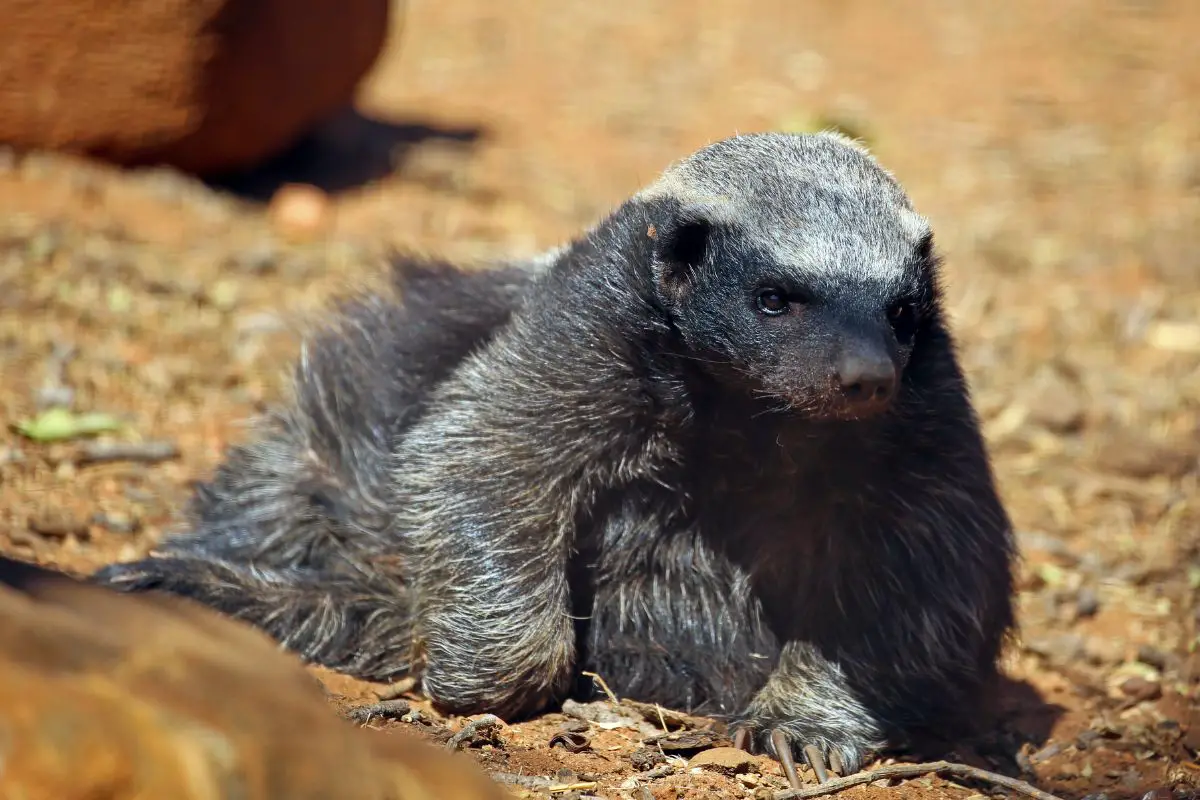
Honey badgers are so solitary and aggressive in the wild that little is known for sure about the lifestyle of this nocturnal weasel. The honey badger, or ratel, roams most of Sub-Saharan Africa, much of the Middle East and the Arabian Peninsula, the Indian sub-continent, and much of eastern Eurasian Europe. They are land-based animals able to occupy various habitats where they can burrow or shelter in rocks and caves.
Size and Features
Honey badgers range from 24 to 30 inches long and about 18 to 30 pounds. Males are larger than females by about one-third. They are stocky with short cubby legs that curve outward.
With a white back (often scarred in older males) and a black body, the honey badger has thick loose skin protecting them from a predator’s grip. They have strong, large claws suitable for digging and holding pre on their front paws and a bite strength that far exceeds that of the American black and brown bears. They are very powerful diggers.
Males are boars, females are sows, and young are kits. Very little is known about young honey badgers, though those born in captivity have been born hairless and take three months to develop a full coat. There has been only one well-documented study in southern Africa.
Mating
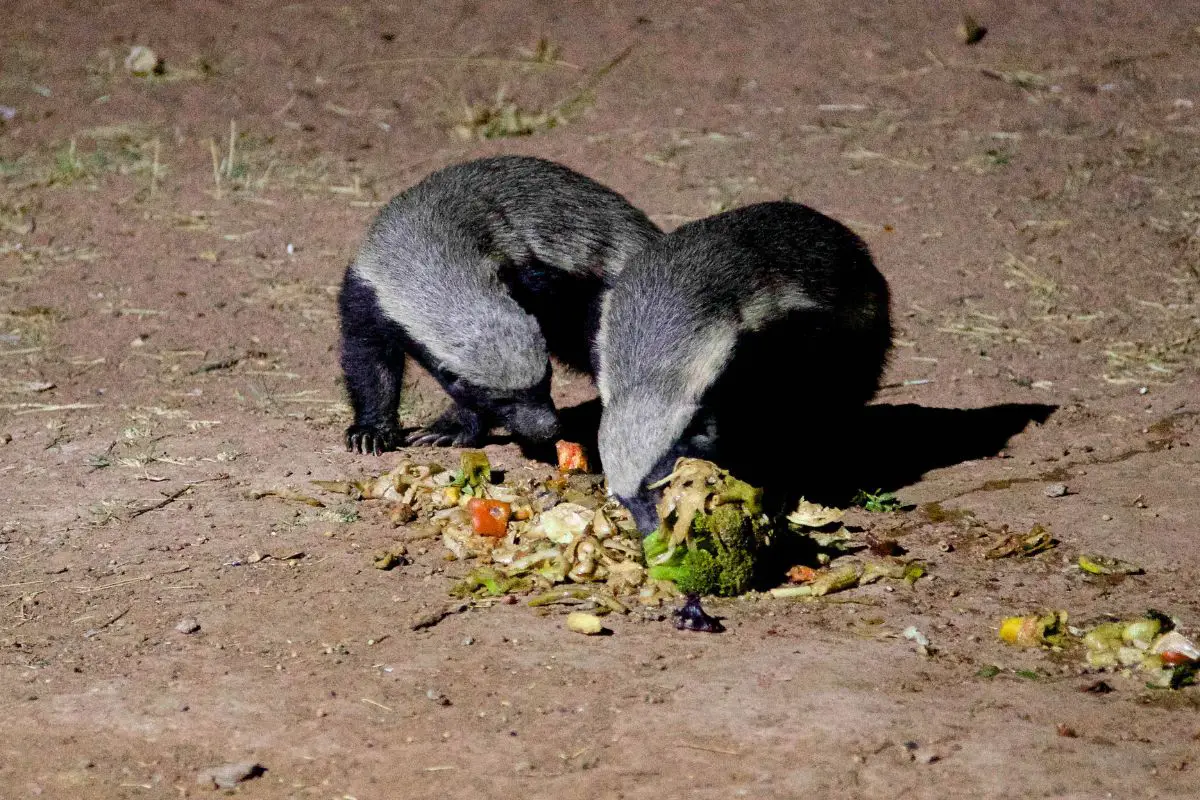
Mating behavior occurs year-round, though slightly more common in the dry season. Recent literature says that honey badgers only come together for mating, but old studies indicate lifelong mating. Males engage in scene-marking to attract females.
The males must compete for mates because females focus on their young for 12 to 16 months. Dominant males are heavier and have larger testes, but this does not guarantee mating success. Mating occurs in burrows and therefore has been rarely observed.
Females are sexually mature at 12 to 16 months, while males do not reach maturity until two to three years. The mating is aggressive and accompanied by play fighting. Females often exhibit submissive appeasement behaviors and present to the male.
Males have been known to protect their partners aggressively in the wild.
No Bonding
Honey badgers do not … Read the rest of the story.

No comments:
Post a Comment