Pages

5 Types of Forests in Ontario

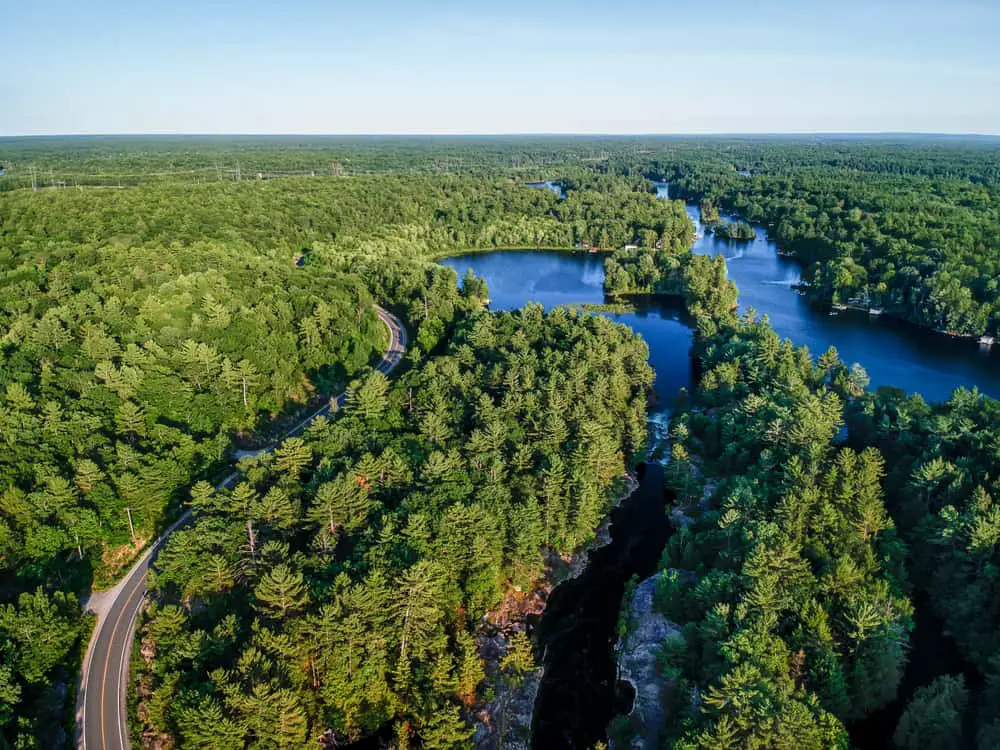
This is an aerial view of a highway winding through a forest in Northern Ontario.

Canada’s forests are beautiful and cover a large amount of landmass throughout this country. Some of the most diversified forests can be found in Ontario. This Canadian province features four distinct forest types that provide natural habitat to various plants, mammals, and birds.

Many tree species are found throughout Canada, offering both coniferous and deciduous tree species throughout Ontario. 

Table of Contents

Types of Forest in Ontario

Ontario is a province in Canada that is known for its rich and dense forests. This area has several varied landscapes that are home to countless species of plants, birds, and mammals.

Throughout Ontario, there are four distinct forest types: the Lowlands near Hudson Bay, the boreal forest in northern Ontario, the Great Lakes region with the Lawrence forest, and the deciduous forests in southern Ontario that are known as the Carolinian forest.

Below, let’s take a closer look at these four different forest types to understand better what makes them unique and special.  

Lowlands
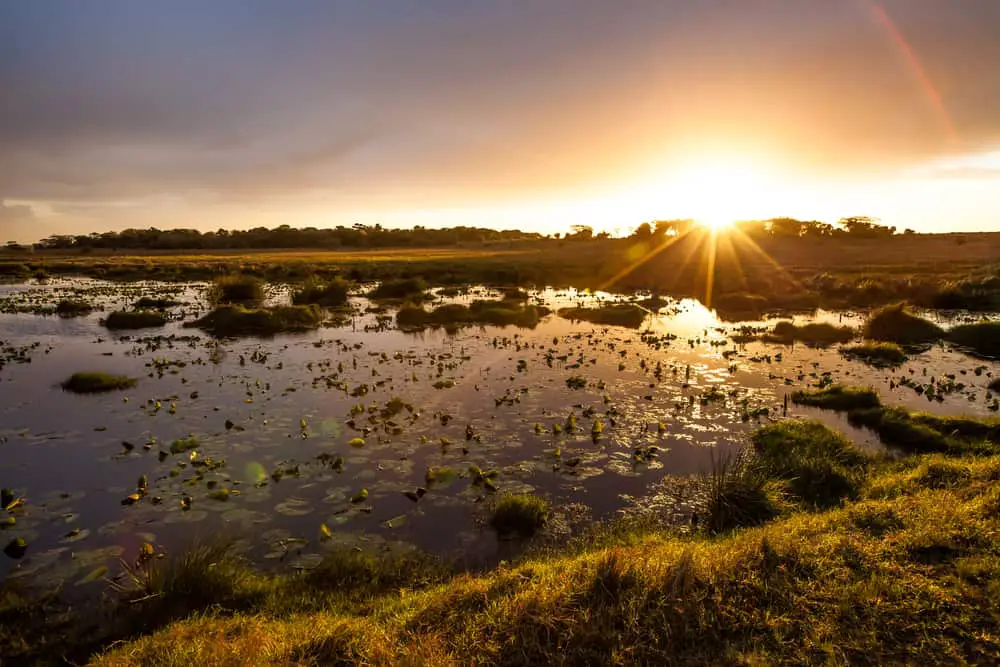
This is a sunset view of a low land with swamp wetland features.

The Hudson Bay Lowlands are located in the far northern reaches of Ontario. This area is the largest parcel of the wetland area globally, making it home to a diverse and intricate ecosystem. This area has several thousand small ponds and lakes and is populated with countless trees.

The entire Lowland wetland area makes up 26 million hectares. Typical trees found in this region include the white birch and the dwarf birch. The arctic fox, arctic hare, polar bear, and woodland caribou call this part of the world home.  

Boreal Forest
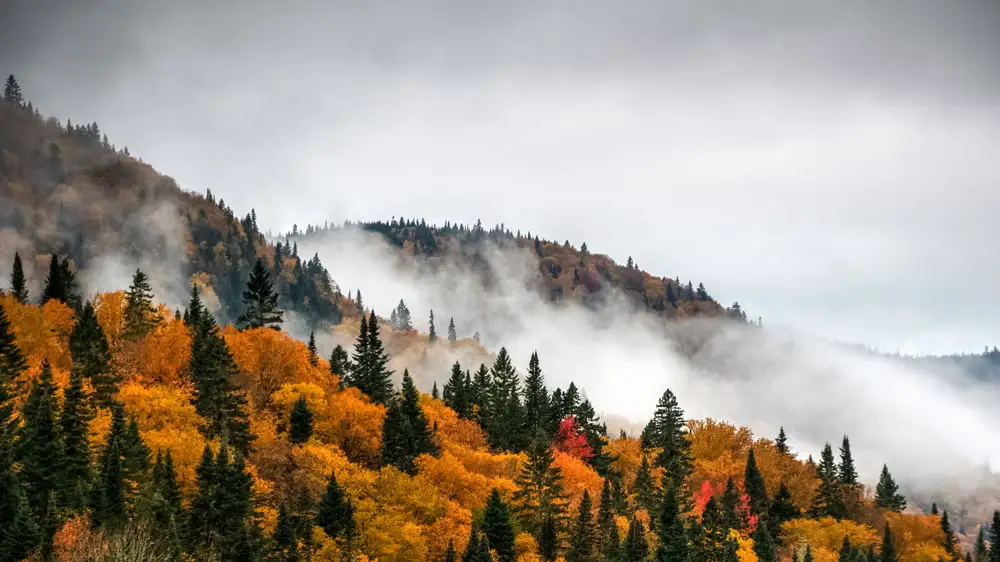
An aerial view of a hilly boreal forest with fog.

In northern Ontario, there is a rich boreal forest. This type of forest is the most populous forest in the world and is commonly found throughout Canada, Alaska, and Russia. Canada’s boreal forest is known for its mostly coniferous trees, which are strong and durable, even in the harsh … Read the rest of the story.

15 Animals Similar to Antelope

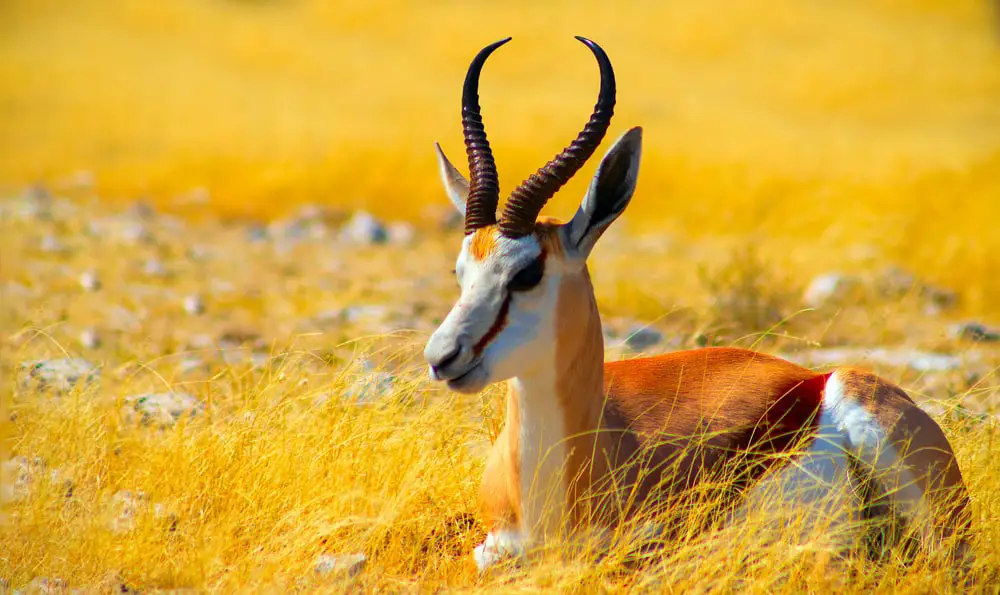
A close look at a medium-sized mature antelope on a grass field.

Antelope is a general name used to denote many species with even-toed hooves. Antelopes are mostly found in Africa and Eurasia, and they mainly inhabit savannahs. They are herbivores where they feed on grass, bushes, and small trees.

Antelopes vary in size and weight by species. Large antelopes are 178 cm tall and weigh 950 kgs which small antelopes are 24 cm long and weigh 1.5 kgs. Antelopes have a 20 years lifespan although it varies by species and habitat.

Most of the antelopes are monogamous when it comes to mating. Antelopes graze in large numbers, and they are also fast for defense purposes. Most female antelopes do not have horns. The article evaluates different animals that are similar to antelopes.

Table of Contents

1. Sheep

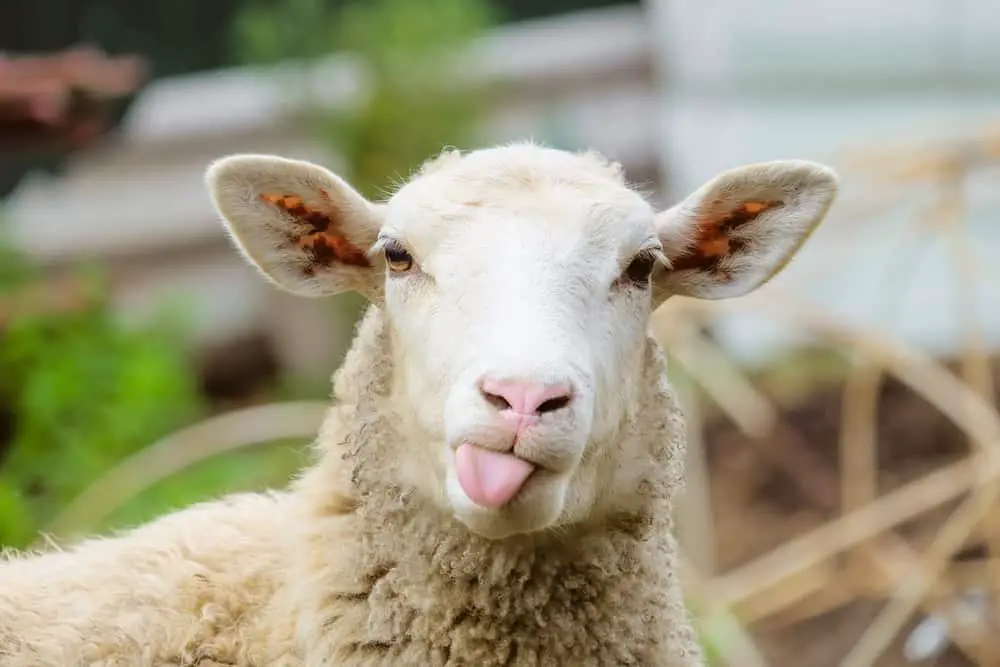
This is a close look at a mature sheep.

Sheep are both domestic and wild ruminant mammals. They originated in Asia and Europe, but now they inhabit all parts of the world. Sheep are herbivores, specifically glazers, which suggests that they only feed on low-growing plants.

Wild sheep are large and heavier compared to domestic sheep. A normal sheep weighs around 45-160 kgs, and it is 1.3-16 meters tall. Sheep have a lifespan of 10-12 years, although some do live to around 20 years.

Sheep have a flock behavior where they graze in large numbers. They also tend to establish dominance through fighting. Sheep do well in savannahs, although most of them can adapt to different environments.

Antelopes and sheep belong to the same family of Bovidae. Both are hoofed, and they are herbivores. The two are also even-toed, and they exhibit similar grazing behaviors where they both graze in herds.

However, the two differ in the size and shape of horns and their fur’s nature. Sheep have small unbranched horns, while antelopes have long and branched horns. In addition, antelopes have smooth and less dense fur while sheep have fine and dense fur.

2. Goats

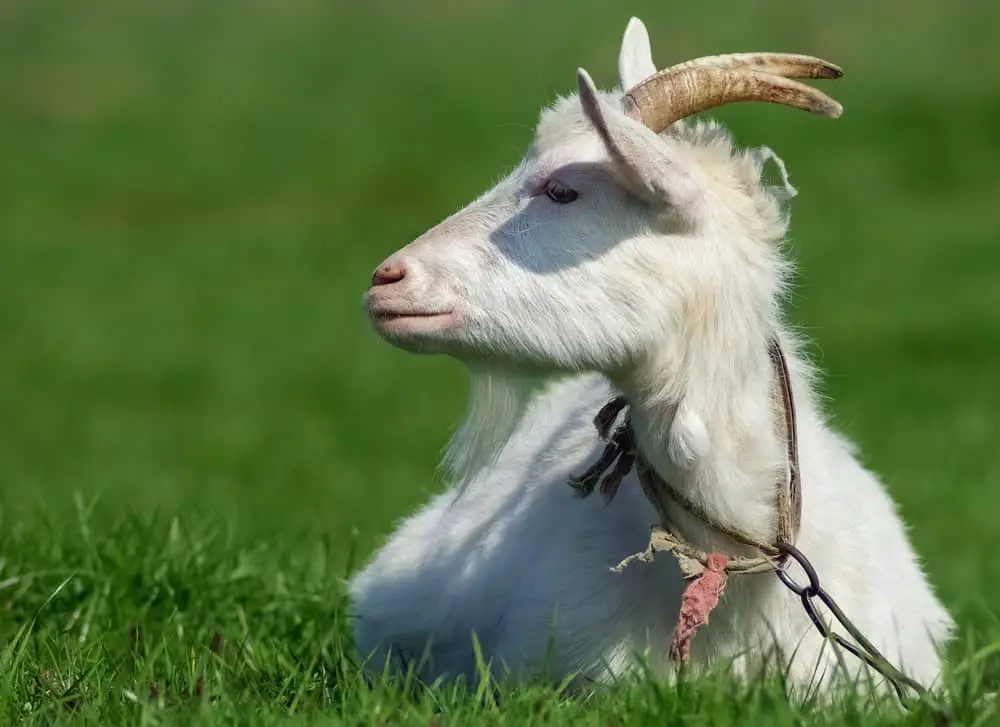
A close look at a white adult goat on a grass field.

Goats are domesticated mammals, although … Read the rest of the story.

3 Types of Forests in British Columbia

A close look at Golden Ears Provincial Park in British Columbia.

Within British Columbia, there are several distinct forest types that hundreds of rare plants and animals call home. Along the coast, it is possible to find a coastal forest and even the rare temperate rainforest. Deeper into the interior and to the north, visitors will find dense boreal forests which populate much of Canada.

Common trees throughout British Columbia include the spruce and lodgepole pine, though further south and in the rainforest, red cedars remain prominent. While much of the boreal forest is densely populated, there is a range of elevations and topography types throughout the coastal forests ranging from valleys, mountains, and coastal wetland areas.  

Table of Contents

Types of Forests in British Columbia

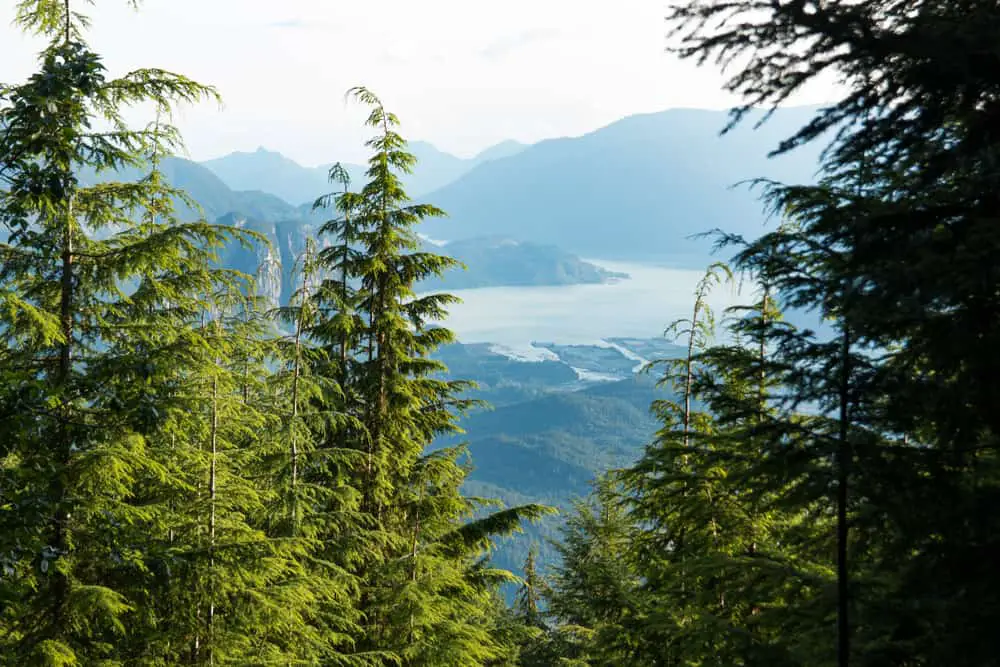
This is a view over Howe Sound Inlet in British Columbia.

British Columbia is the far western province of Canada sandwiched between Washington state to the south and the Arctic to the north. This area is known for its densely populated forests that are home to countless animals and plants.

Although most forest in this area is categorized as the boreal forest, the rare coastal forest and temperate rainforest give this part of the world a unique and exciting ecozone that cannot be compared to anywhere else in the world. Below, let’s take a closer look at British Columbia’s forests to appreciate better the vast diversity these forests can offer.  

Coastal Forest

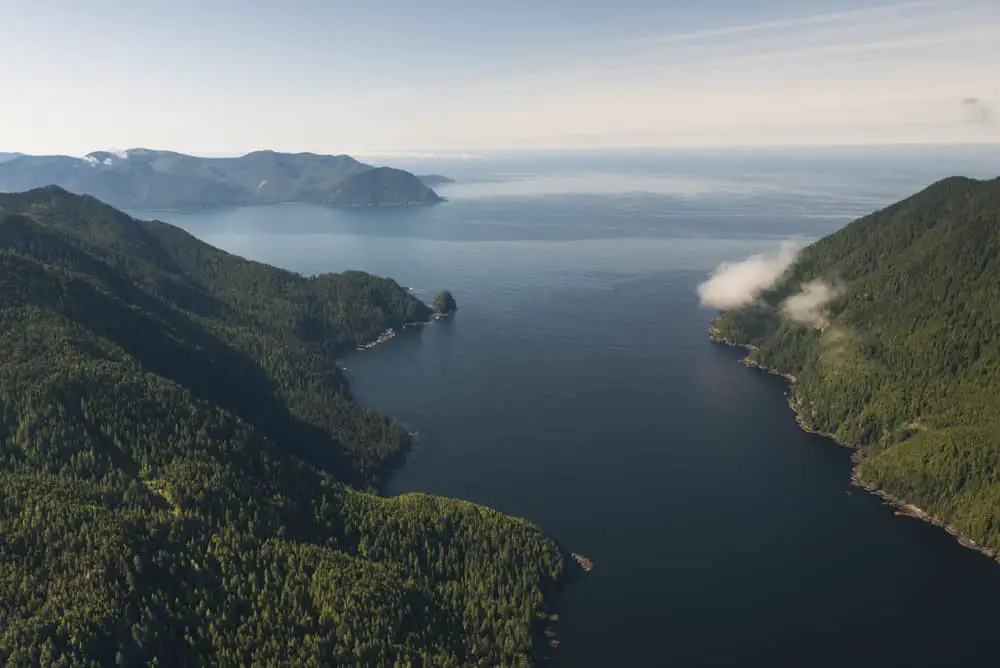
This is an aerial view of Graham Island in British Columbia.

Located along the Pacific Ocean, British Columbia is home to some incredible coastal forest areas. Stretching 150 km down the coast of western Canada, visitors will find a range of tree species and several animals that can only be found in this part of the area. The coastal forests extend from the Cascade Range in northern Washington into Canada.

They include parts of the Nass Ranges and the Nass River and include parts of Olympic Mountain and Olympic Peninsula. While most trees are coniferous in a densely packed forested area, it is also possible to find lowland areas with … Read the rest of the story.

15 Animals Similar to Ferrets

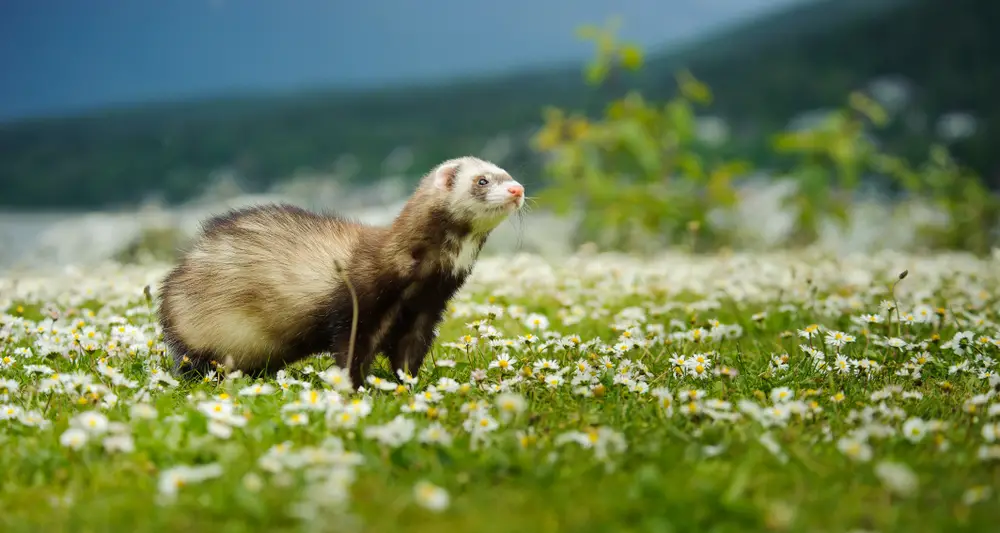
A ferret on a field of flowers.

Ferrets live in the wild in Europe, Asia, and Africa. Black-footed ferrets still exist in the wild in North America but are listed as endangered. The small mammals weigh 1-5 pounds and are up to 18 inches long. Ferrets have a lifespan of 5-10 years or longer when domesticated.

Wild ferrets reuse tunnels built by other animals. They need about 120 acres of living space for adequate food resources. As nocturnal creatures, ferrets hunt for small mammals, birds, fish, and other meat to survive.

Ferrets are part of a family of mammals known as mustelids. The mustelid is a small carnivorous mammal known for its long bodies, short legs, and anal scent glands. Domesticated ferrets come in white, sable, black, and brown, and many combinations. Owners often have the scent glands removed in pet ferrets.

Table of Contents

1. Weasel

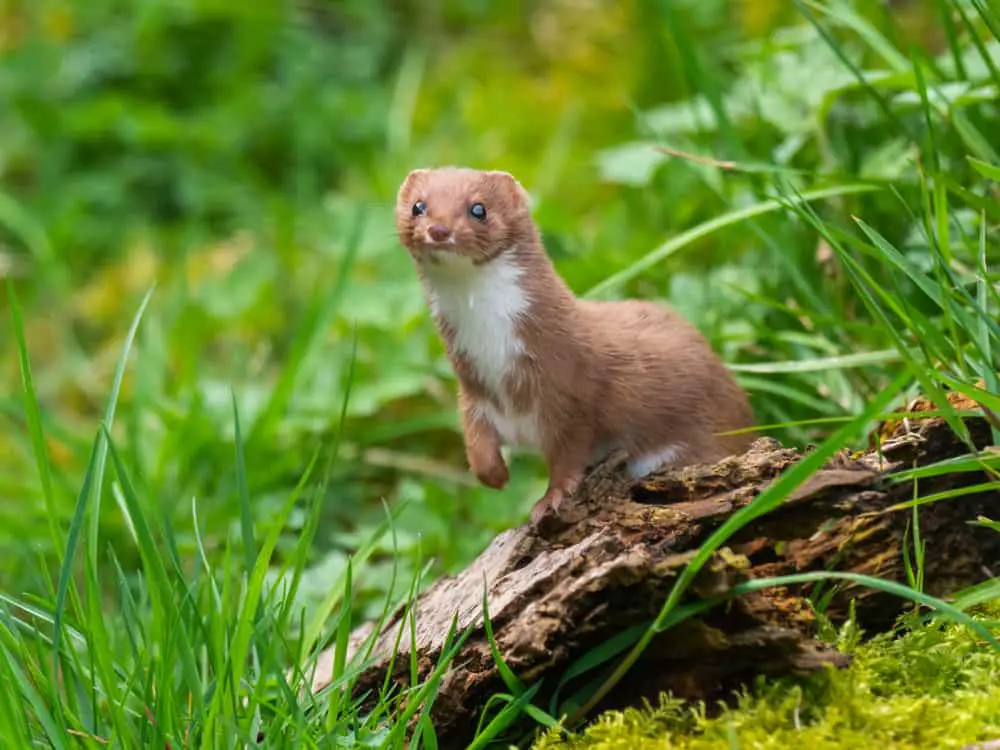
A brown weasel on a grass field.

Weasels are also part of the mustelid family. They have brown, black, or gray coats, but all turn white in the winter. Weasels look like ferrets but are much smaller. They weigh between 1-12 ounces and are about 4-10 inches in length.

Weasels live in many parts of the world and enjoy a much larger variety of terrain than the ferret. The weasel will happily make their home in woodlands, riverbanks, meadows, and marshes. Weasels can dig a burrow for a home quickly. They do not rely on other animals to dig their tunnels but take over abandoned homes if one becomes available.

Some species of weasel can live ten years, but most will only survive 3-5 years. Weasels often have litters of up to a dozen babies (called kits) compared to the 1-6 kits born to ferrets. The weasel and ferret have gestation times of about one month.

2. Badger

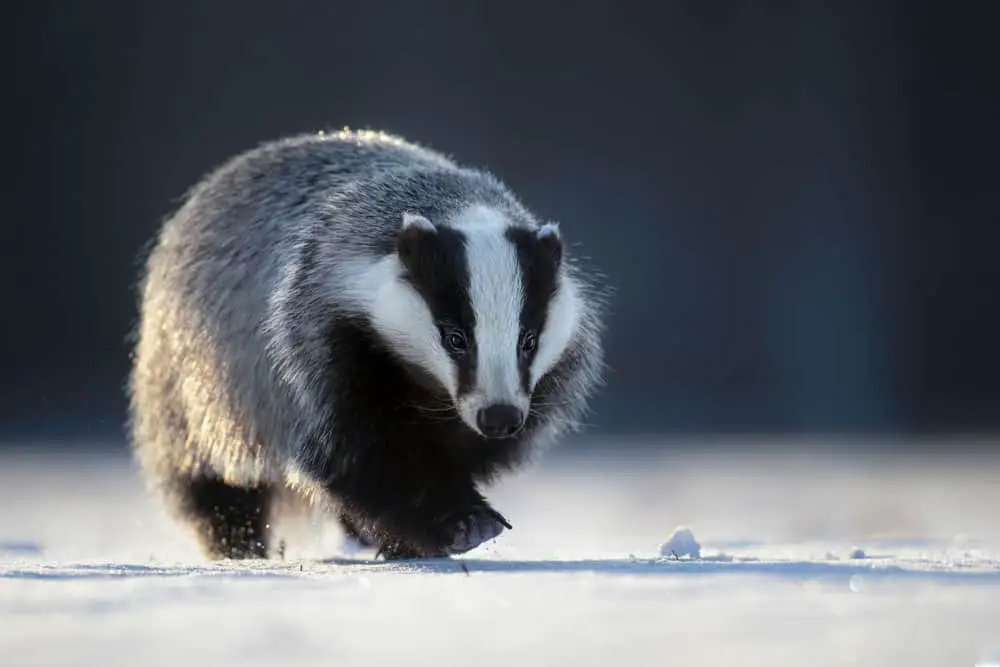
A close look at a badger walking on snow.

Badgers are from the same family as ferrets. They are bigger and can grow up to 36 pounds. The smallest is known as a ferret-badger. Larger breeds have stocky, … Read the rest of the story.

4 Different Types of Forests in Brazil

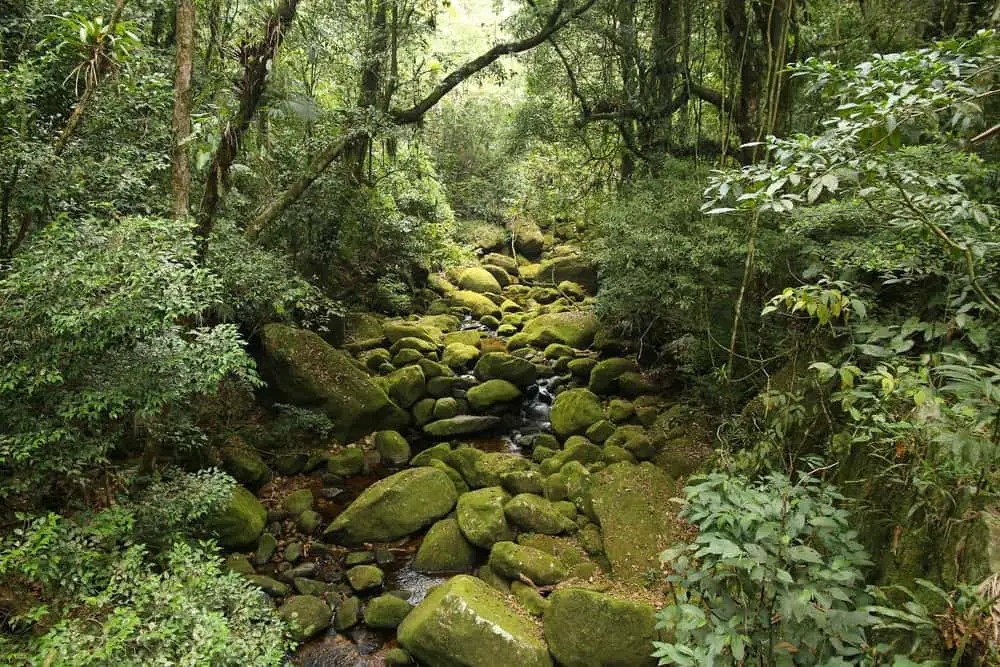
This is a close view of the Mata Atlantica Jungle in Brazil.

There are two main types of forests in Brazil, both of which are classified as tropical forests due to their location in relation to the equator. The forests in Brazil either consist of rainforest, including nearly 60% of the Amazon rainforest, or secondary forest, which is a juvenile forest that has been planted as a response to deforestation. The tropical forest in Brazil is the primary habitat of countless plants, fish, mammals, amphibians, birds, and reptiles. 
 
When it comes to forest areas, Brazil is home to some of the most diverse and dense forest areas in the entire world. Due to its location, much of the forest in Brazil is categorized as a tropical forest. It is hot and humid and home to countless species of flora and fauna that make this a diversified and valuable area.

60% of the Amazon rainforest is located within Brazil’s borders, and it follows that this area receives a great deal of rain throughout the year. Although the heart of the Amazon rainforest is in Brazil, much of the forest area is rapidly disappearing due to timber production and cattle ranching.

Below, let’s take a closer look at the types of forests in Brazil and better understand the plants and animals that call these forests home. 

Table of Contents

Tropical Forest

A small waterfalls inside the tropical forest.

Technically speaking, a tropical forest is any densely populated forest area that is located 28 degrees north or south of the equator. This location makes these tropical forests hot and wet. Usually, tropical forests will have an average yearly temperature that hovers around 85 degrees.

While there are tropical forests throughout the world, including South America, Asia, and Africa, Brazil has over 30% of the world’s tropical forest area. 

Brazil’s tropical forest is filled with dense trees that grow to be thick and tall. The trees have a … Read the rest of the story.

4 Different Types of Forests in Oregon

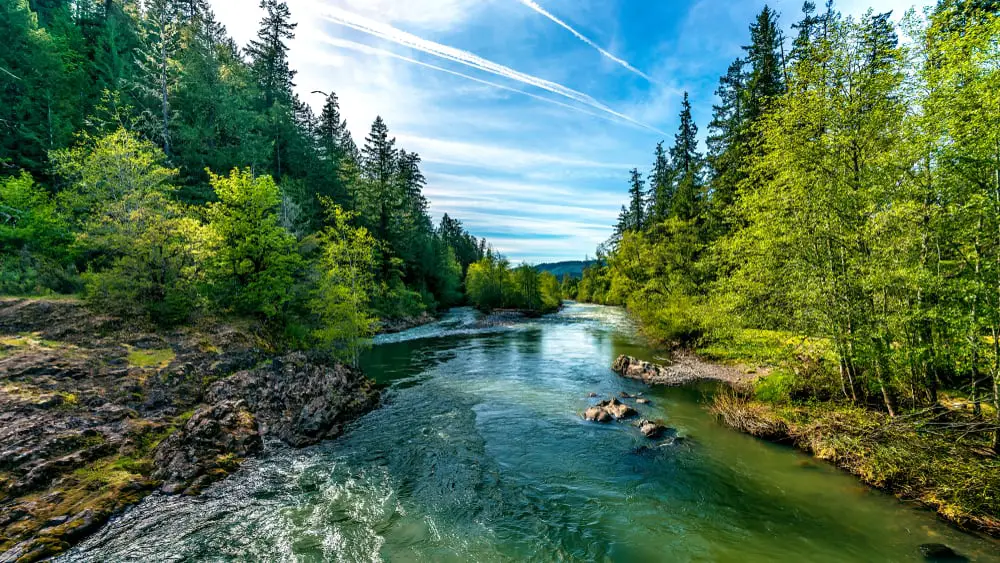
This is a close look at a river within a forest in Oregon.

Oregon is an exciting and fascinating part of the United States that is home to some incredible forests. Forested areas cover nearly half the state, and the vast majority of forests are conifers. This area also features the rare temperate rainforest.

It’s possible to see old-growth ancient trees in this area of the country, with some western red cedar trees reaching over 1,000 years of age. 

Table of Contents

Types of Forests in Oregon

Oregon is home to some incredible forests and woodland areas filled with ancient trees and beautiful, dense vegetation. It may surprise some people to learn that Oregon is actually home to a rainforest. Rich in vegetation, visitors will be pleased to find various tree types as the type of forest will change from one part of the state to another. 

Conifer Forest

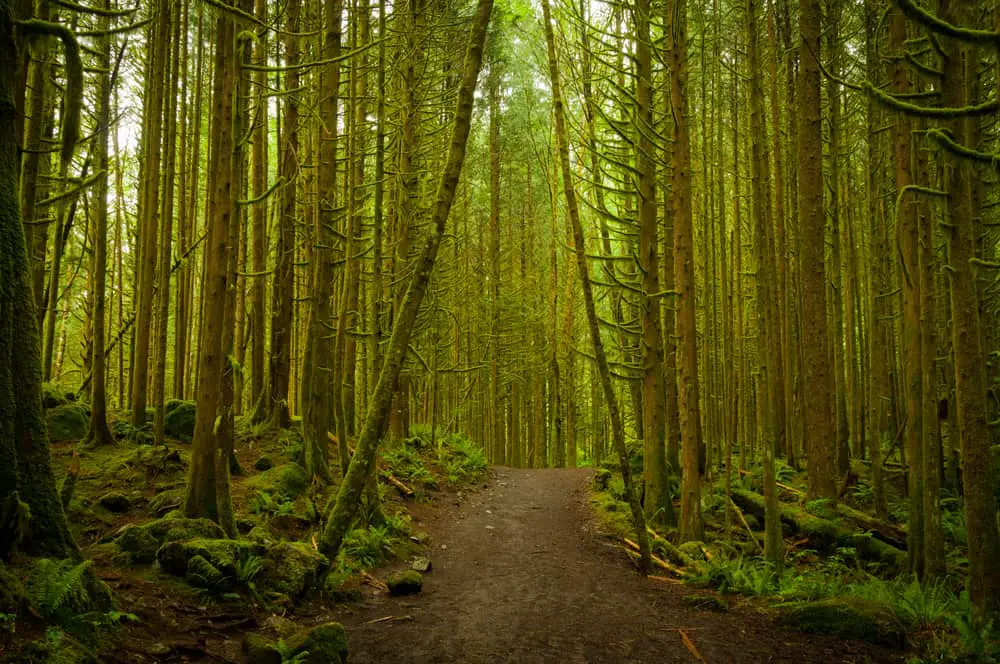
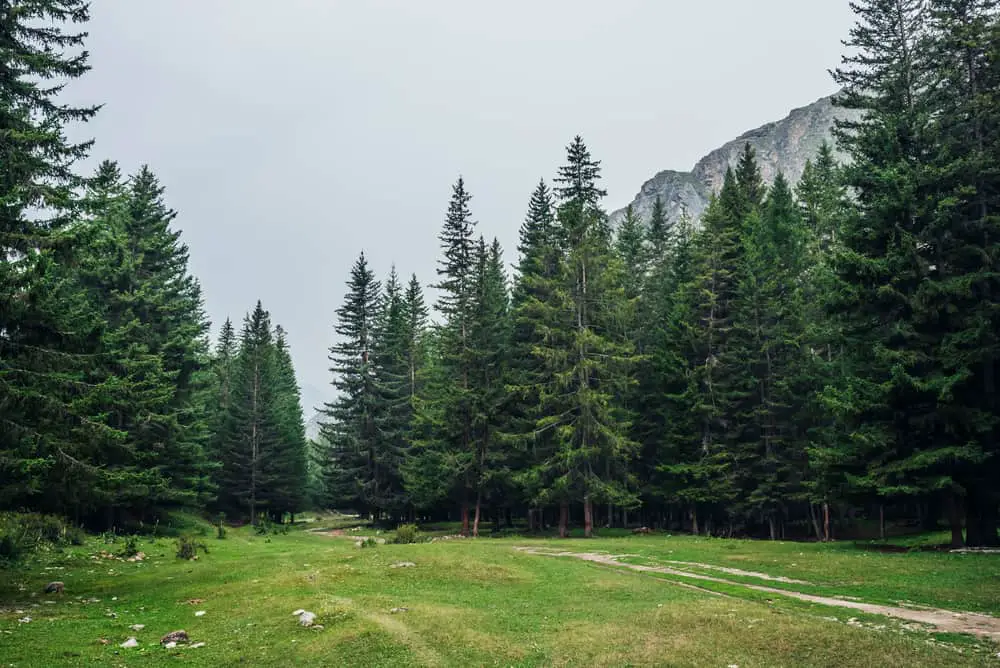
A close look at a conifer forest with a path running through it.

Oregon is home to many coniferous forests, which, as the name implies, consist mainly of conifer trees. These are trees that have long needles in place of leaves. They have needles attached to the tree year-long and are resistant to cold weather and harsh conditions.

Instead of flowers like other trees, conifers will get cones as they bud. These trees do an excellent job at surviving in particularly cold or dry conditions.  

The largest and most concentrated forests in Oregon are coniferous, which account for nearly 86% of all the forests in Oregon. Within the coniferous forests, Douglas fir trees account for over one-third of the total trees and vegetation. These trees are incredibly hardy, green all year round, and can grow large and strong.  

In Oregon specifically, several hemlock forests run along the crest of the Cascade mountains. Other conifer tree species found in Oregon include Englemann spruce and lodgepole pine trees. There are … Read the rest of the story.

15 Animals Similar to Coyotes

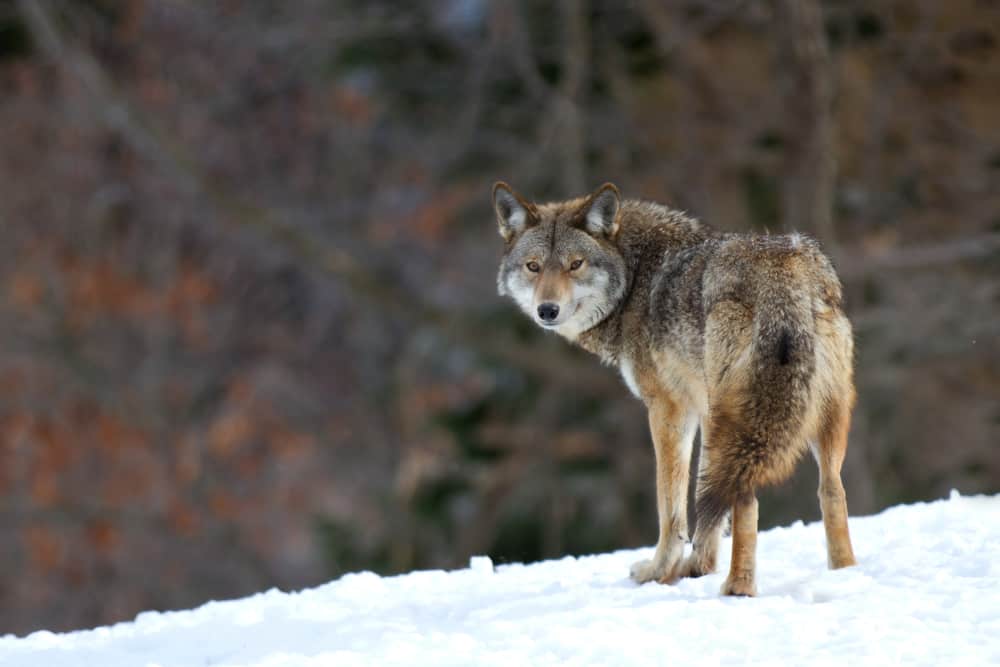
A coyote wandering in the winter snow.

Coyotes are members of the Canidae family and have many traits in common with their relatives (wolves, dogs, foxes, and jackals). They have tight snouts, lean bodies, yellow eyes, thick fur, and bushy tails. These canids are smart and versatile creatures and are generally labeled as ‘wily’ by human beings.

Their industrious characteristics have helped coyotes to spread throughout North America and even to live with people in the cities. The continental population continues to flourish despite occasionally rocky encounters with humans. These animals are significantly smaller than wolves.

A coyote skull is seldom greater than 7.9 inches (20 cm) long, whereas the wolf skull is typically greater than 22.5 cm (8.9″). Depending on where they live, their fur may be gray, white, tan, or brunette.

Native to regions throughout the Americas, coyotes are often found roaming across Canada, the United States, Mexico, and Central America. Their range extends throughout Mexico as well. Deserts, plains, and forests are preferred dwellings of the coyote.

These creatures have colonized all continents, with the exception of the polar regions, and continue to move south — quite close to the Central-South US frontier in eastern Panama.

Table of Contents

Grey Wolves

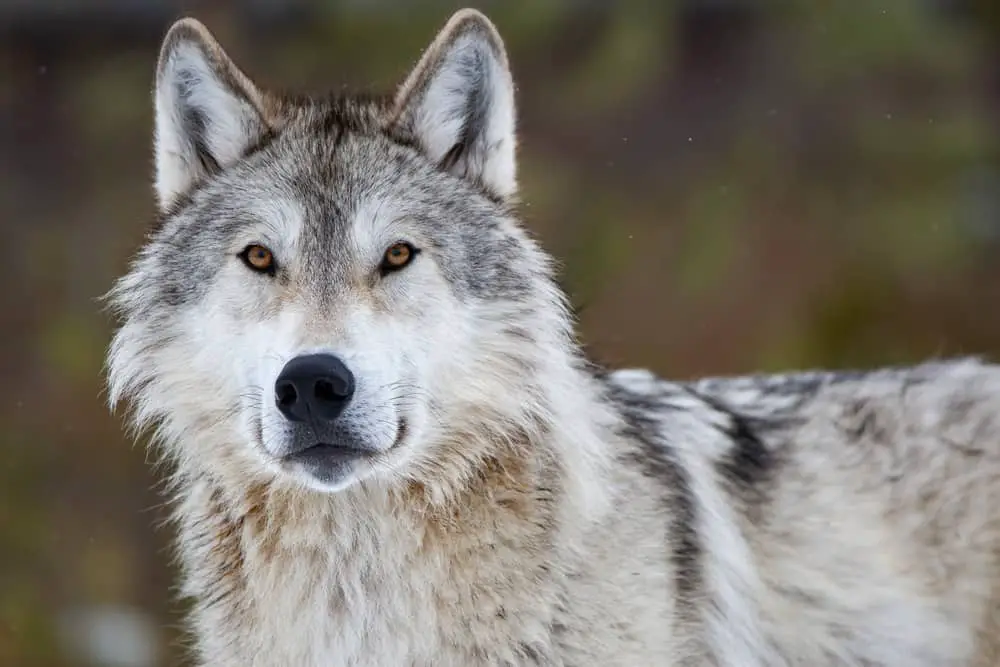
North American grey wolf

Grey wolves or wood wolves are canines, often having characteristically black-tipped, long bushy tails. Typically, their coloring is a mixture of gray and brown with buffy markings and undersides, though it may vary from solid white to brown to black. Gray wolves look like large German Shepherds.

The wolves’ appearance is dependent on where they live. and they can vary in size. In the north, wolves are generally bigger than in the south. The average length of a wolf’s body is 3-5 meters, and their tails are typically 1-2 meters long.

60 to 100 pounds is the typical weight range for females, while 70 to 145 pounds is the typical weight range for males. Over two-thirds of the United States was the historical … Read the rest of the story.