Pages

3 Types of Forests in Saskatchewan

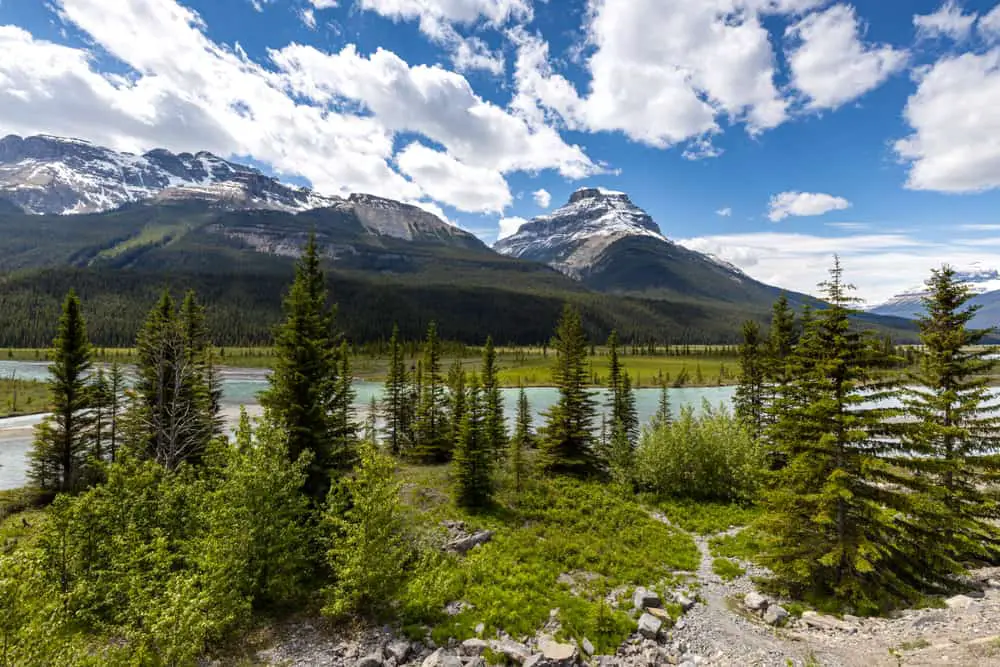
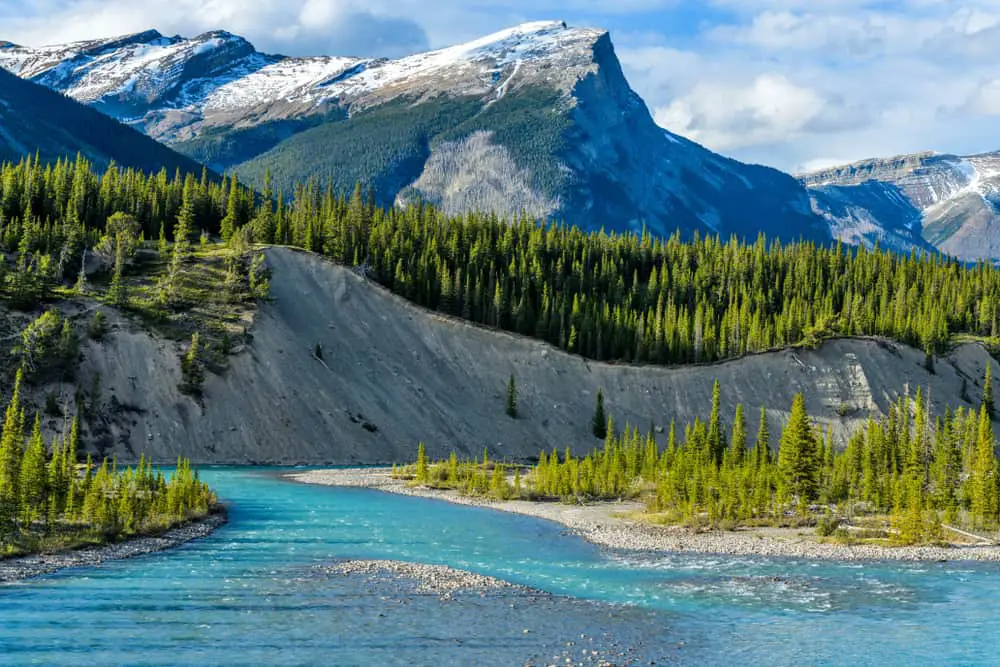
This is a view of the Saskatchewan River inside Banff National Park.

Known for its breathtakingly beautiful flat prairie landscapes, as well as its dunes and thousands of lakes, Saskatchewan is a paradise for those who love the outdoors! As someone who loves the outdoors, I know what it means to appreciate its impact on our daily lives. So, what type of forests exist in Saskatchewan?

Saskatchewan has four different types of forests: urban forests, agro-forests, commercial forests, and northern forests (nine forests). They provide cover from the prairie winds and the summer sun, improve the economy by planting trees for agriculture, give renewable resources.

Saskatchewan’s identity lies in its surrounding forests. They can give us some great insight into the lifestyle that locals choose to lead. Each forest is unique and serves a very special purpose that helps Saskatchewan thrive. Let’s take a deeper look at how Saskatchewan forests add infinite value!

Table of Contents

Types Of Forests In Saskatchewan

This is another look at the Saskatchewan river with a view of the rocky mountains.

Urban Forests in Saskatchewan is a huge boon for the locals! The vast majority of urban areas are plants grown by the residents who live there. Originally, there were few trees in the southern sections of the province to greet settlers due to the nature of the Prairies and the frequent fires, save in coulées and along river banks.

Cultivating agricultural products during the short growing season was a necessity. It was better to use existing wood for living purposes. The purpose of planting trees was to protect the prairie winds and the summer sun, resulting in the formation of an urban forest in each settlement.

Agro-forests have seen a lot of success in Saskatchewan. Agriculture … Read the rest of the story.

6 Different Types of Forests in Alberta

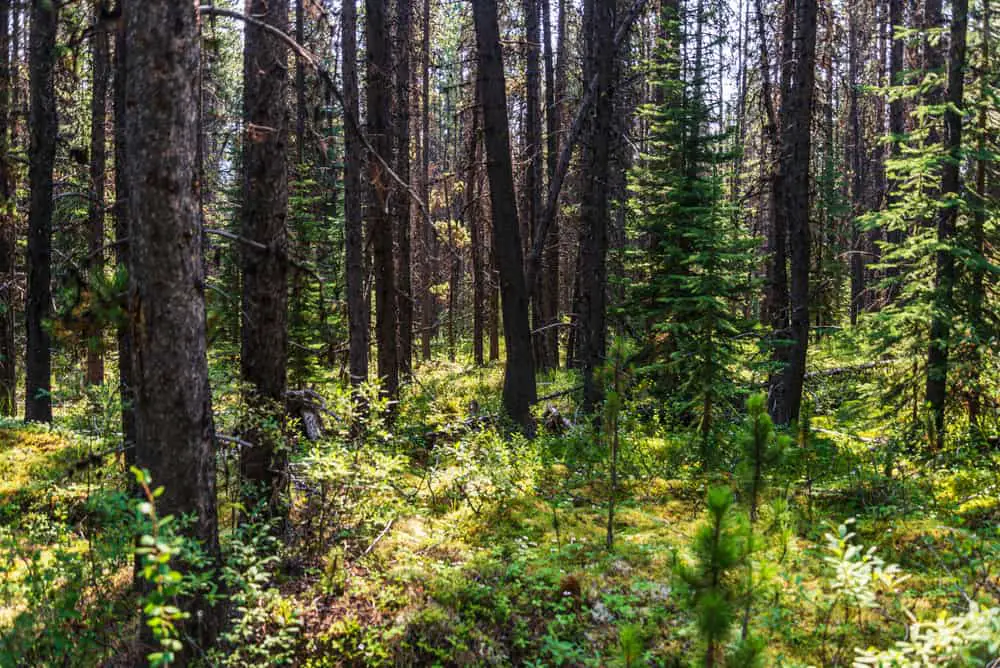
This is a close view of the forest in Jasper National Park in Alberta, Canada.

Forests are a spectacular natural creation that is as beautiful as it is dangerous. I adore the city, but camping with friends and family and hiking has its special magic that is irreplaceable!  

There is a lot to be admired, so let’s start our trek together and discover what makes these forests such a breath of fresh air.

Alberta has six types of forests; Alberta Mountain Forests, Alberta-British Columbia foothills forests, Aspen Parkland, Mid-Continental Canadian Forests, Muskwa-Slave Lake Forests, and North Central Rockies forests. Each forest boasts a unique tree species and wildlife native to its region.

We can all guess what may lie in a forest, but in each forest is a thriving ecosystem unique to its region! The chance to view such a magnificent spectacle is exciting, especially considering that we rely on them for our survival, too!

Table of Contents

Types of Forests in Alberta

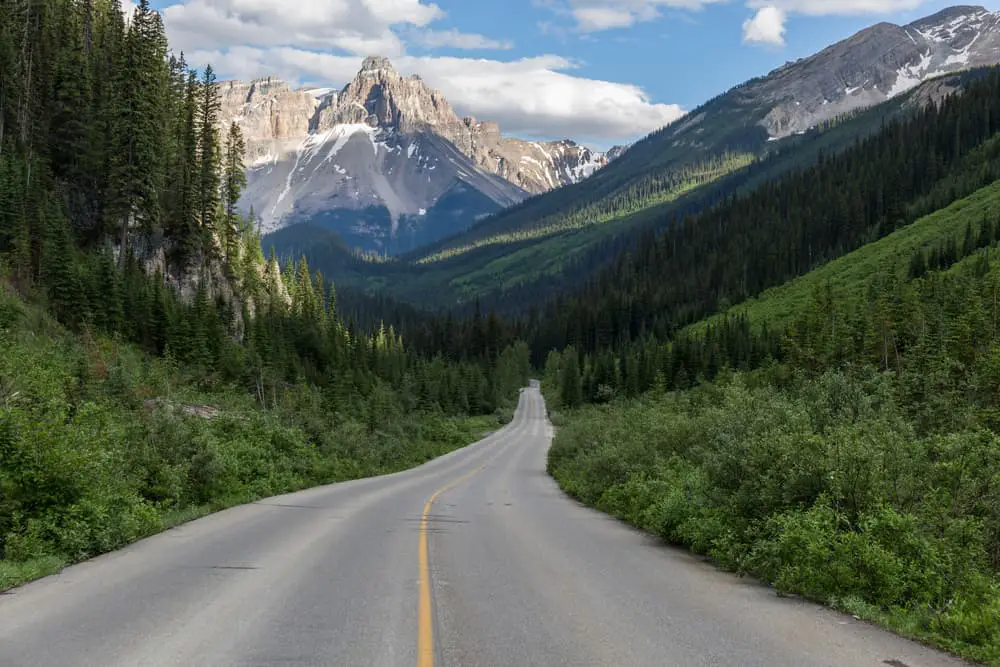
This is a Canadian mountain road surrounded by forests.

In Western Canada, the Alberta Mountains are an ecoregion of temperate coniferous forests. This ecoregion includes Alberta’s majestic Rocky Mountains, as well as the Continental Ranges’ eastern outliers. It is a glacier-covered location with towering mountains and a forest of tall trees.

The Alberta–British Columbia foothills forests are a temperate coniferous forests ecoregion of Western Canada. It borders Canada’s taiga and contains a mix of subarctic forest and temperate forest species. 

Aspen parkland consists of groves of aspen poplars and spruce trees mixed with prairie grasslands and vast stream and river valleys bordered with dense aspen-spruce woods and shrubs. There are several tiny lakes and ponds in this mountainous terrain. It is the world’s largest boreal-grassland transition zone!

Mid-Continental Canadian forests’ ecoregion extends through most of north-eastern Alberta. There are … Read the rest of the story.

6 Different Types of Forests in Africa

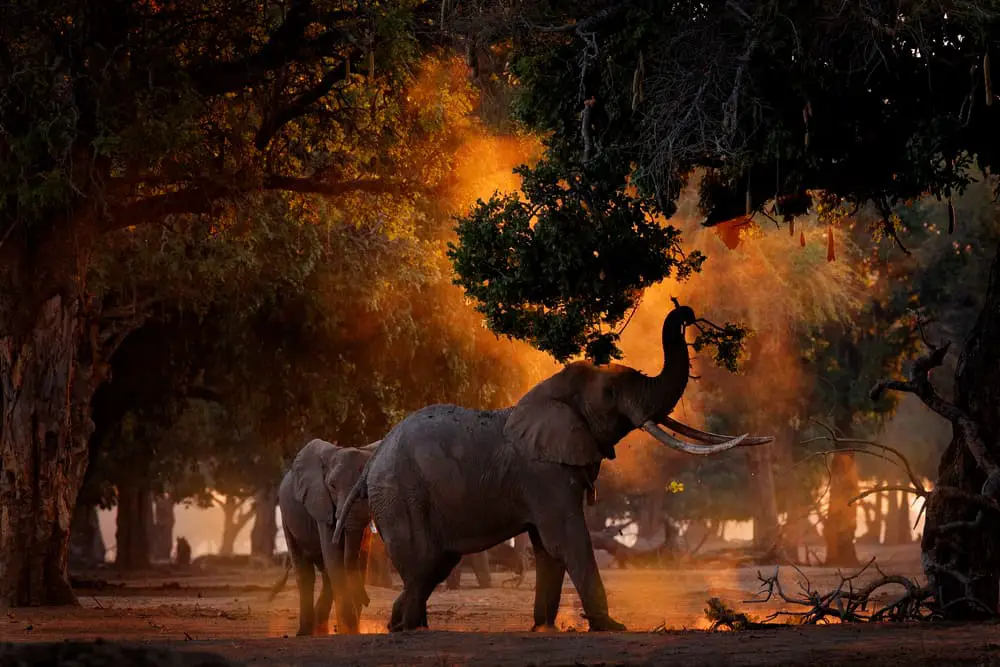
This is a view of elephants feeding in a forest in Africa.

Africa is the second-largest continent in the world and has been credited with the birthplace of humanity. Our ties to Africa are ancient and none more than the link to its forests. In literature, pop culture, exploration, and wonder, the deep enchanted forests of the Congo are what we picture when we think of Africa. But, what other types of forests do we find on the continent?

According to the United Nations Food and Agriculture Organization, approximately 22.7% of Africa is covered in forests. These forests are divided between “Tropical” and “Temperate.” Forests biomes are located in Sub-Saharan Africa, with the greatest biomass in West and Central Africa.

Although the overarching categories of forests are limited to tropical and temperate, local environmental conditions shape the formation of these forests to create some interesting varieties and diversity.

Table of Contents

A Guide To The Types Of Forests Found In Africa

A forest, according to Britannica, is a “complex ecological system in which trees are the dominant life-form.”

Although forests vary greatly in terms of plant and animal composition, certain factors remain the same.

For a tree-dominated forest to exist, the mean summer temperature must be above 50 °F, with a minimal annual rainfall of 8 inches.

There are three broad categories of forests found globally. These … Read the rest of the story.

5 Different Types of Forests in India

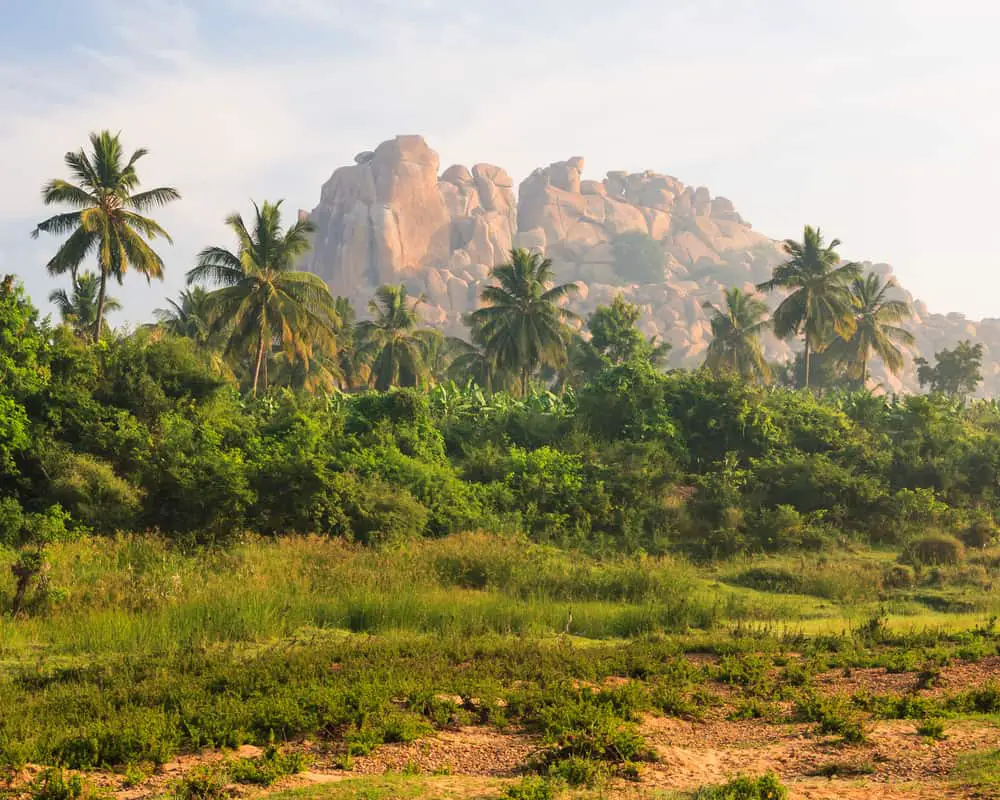
This is an exotic forest in Hampi, India with a large rock mountain in the background.

India is  brimming with natural resources, so much so that the British referred to it as the “Jewel of the Empire.” With the Tropic of Cancer running through the country, India has the perfect climate for forests, but what types of forests are located in India?

India’s forests are divided into five categories according to the amount of rainfall received and species composition. These forests are Tropical, Montane subtropical, Montane temperate, Subalpine, and Alpine. These five categories are further subdivided to make 16 groups of “Forest Types.”

Over the years, India’s forests have been divided into 202 different types and subtypes within the 16 groups. But what are some examples of these, and what are the characteristic features found in each?

Table of Contents

An Overview To The Types Of Forests Found In India

India is a large country situated on the Asian continent. India lies between North 8° 4′ and 37° 6′ latitude, and East 68° 7′ and 97° 25′ longitude.

With such a vast landmass, there is a lot of diversity in climate and geology, which, in turn, gives rise to a large variety of different flora and growth forms.

Some ofRead the rest of the story.


Which Animals Jump The Highest?

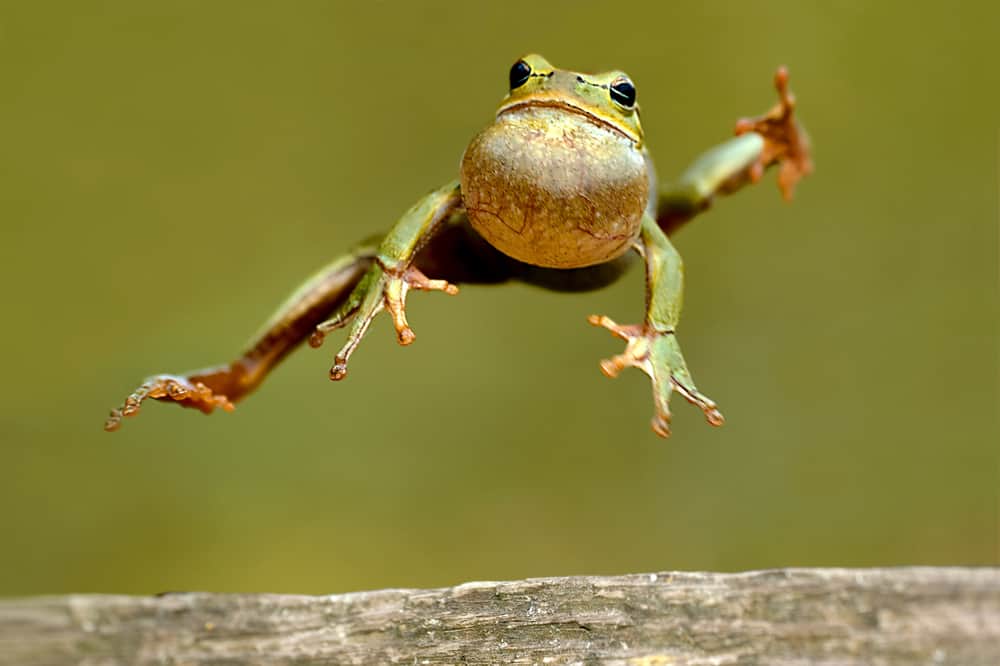
This is a close-up of a frog jumping from the tree.

I recently visited a wildlife park and saw lots of different animals. All of them were unique in their own way. Some were very fast, and others could climb the most challenging terrain with ease. I saw everything from insects to lizards and even big animals like lions.

Then I saw the scariest thing. He or she might have been small compared to me, but that spider jumped in my direction at the speed of light. Waving my hands around, I looked like someone trying their hand at kung fu.

It jumped, and I screamed and ran my short little legs off. It intrigued me. When I got home, and I had to find out what animals jump the highest? I did some research, and this is what I found.

Animals like Pumas, Impalas, Springbok, and even dolphins are some of the world’s highest jumpers. One of the highest jumpers in comparison to its size is the jumping spider; this arachnid can leap 50 times the length of its own body. Another contender is the grasshopper, and they can jump up to 23 ft.

While most animals have had to adapt to their surroundings at one time or another, some would make even the most accomplished human athletes wish they had four legs or eight in some cases. These magnificent animals come from all over the animal kingdom and can shatter some of the world’s most formidable Olympic records without breaking a sweat.

However, it is essential to remember that some of these high jumpers might not be big mammals but can jump staggering heights compared to their body size.  I did a lot of research, and here is what I found. 

Animals that jump the highest from around the world are:

  • The kangaroo rat
  • The froghopper
  • Pumas
  • Kangaroo
  • Grasshoppers
  • Impalas
  • Dolphins
  • Jumping Spider
  • Mountain Goats
  • Fleas

Table of Contents

The Kangaroo Rat

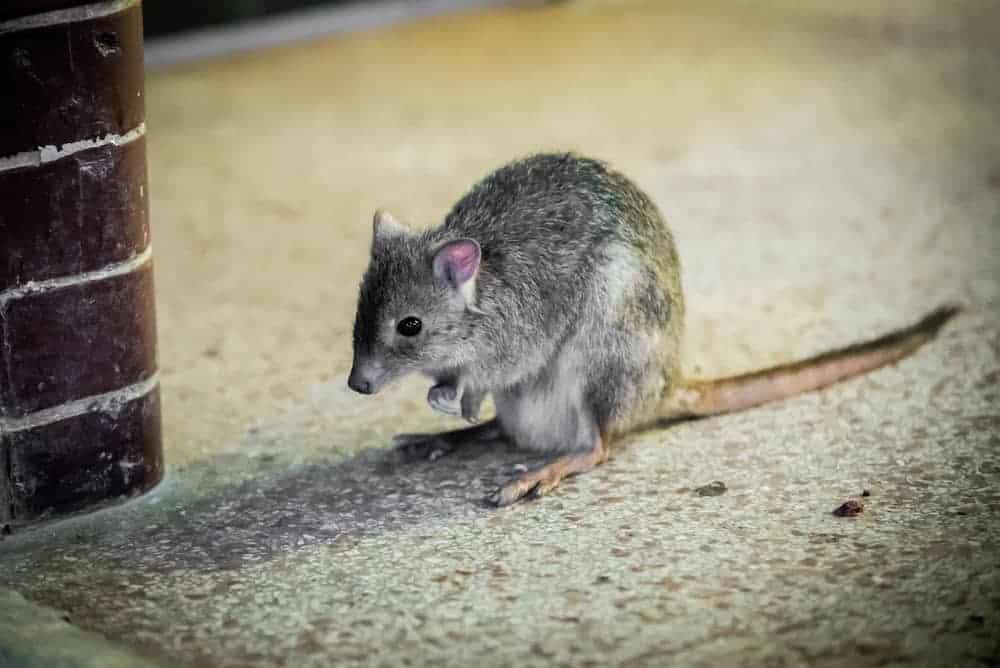
This is a close look at a kangaroo rat standing on a concrete floor.

Despite its name and appearance, the kangaroo rat is not a mouse, rat, nor hamster. Its closest relative … Read the rest of the story.

Which Animals Have Camouflage?

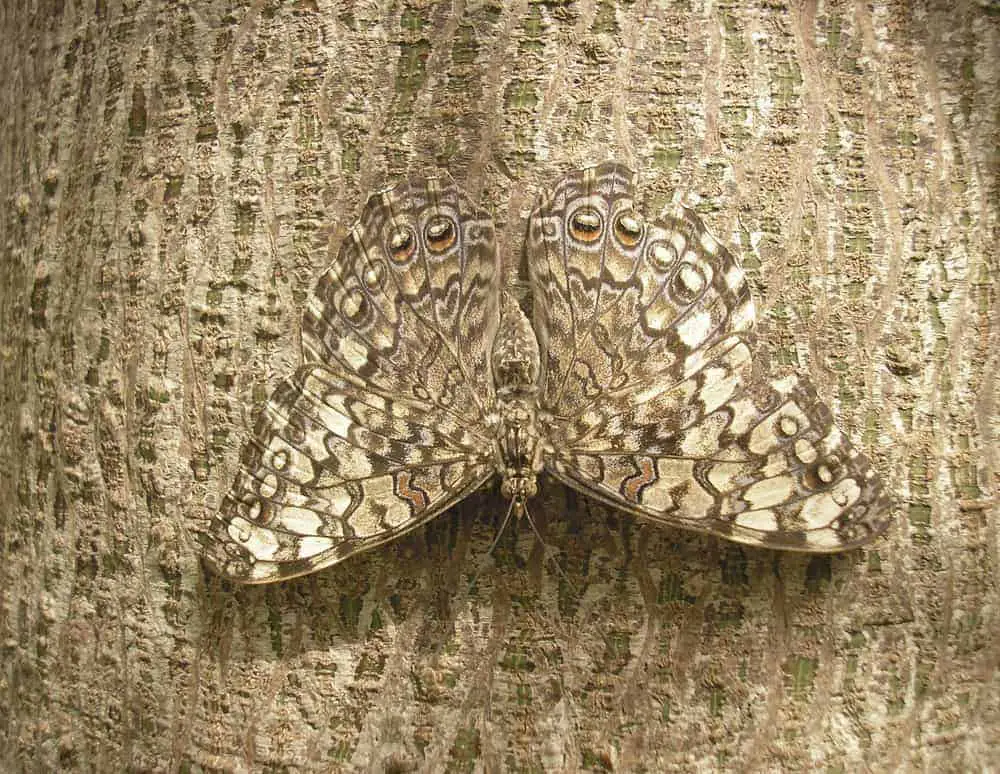
A close look at the camouflage of a butterfly on the bark of a tree.

My family and I were walking through our garden the other day, we caught sight of a leaf running away from us and up the trunk of a tree. The funny thing is, there was no wind blowing at the time. As we got closer to it, just hanging out on the tree branch, we realized it was an insect, a type of Mantis that has a camouflaged body that makes it look just like a brown leaf.

While investigating further, we found out that the insect was called a Ghost Mantis. It made me wonder about other animals that could camouflage themselves.

Research shows that different animals use mimicry and camouflage depending on three factors: behavior, hunting grounds, and blending in, e.g., a wrap-around spider uses its anatomy and behavior, predators use the environment they hunt in a while blending in with the habitat common for a chameleon. 

In my research, it was surprising to learn that animals use camouflage regardless of their environment. Terrestrial animals, aerial animals, aquatic animals, and arboreal animals all have some species that use mimicry or camouflage as it’s commonly known to survive.

If you love animals just as much as I do, you will find the information I have gathered just as compelling as I did. However, it is kind of scary to know some animals can be living in plain sight, maybe even in your back yard, and you would be none the wiser.

Table of Contents

Mimicry vs. Camouflage

Well, you might be forgiven for believing … Read the rest of the story.


4 Different Types of Forests

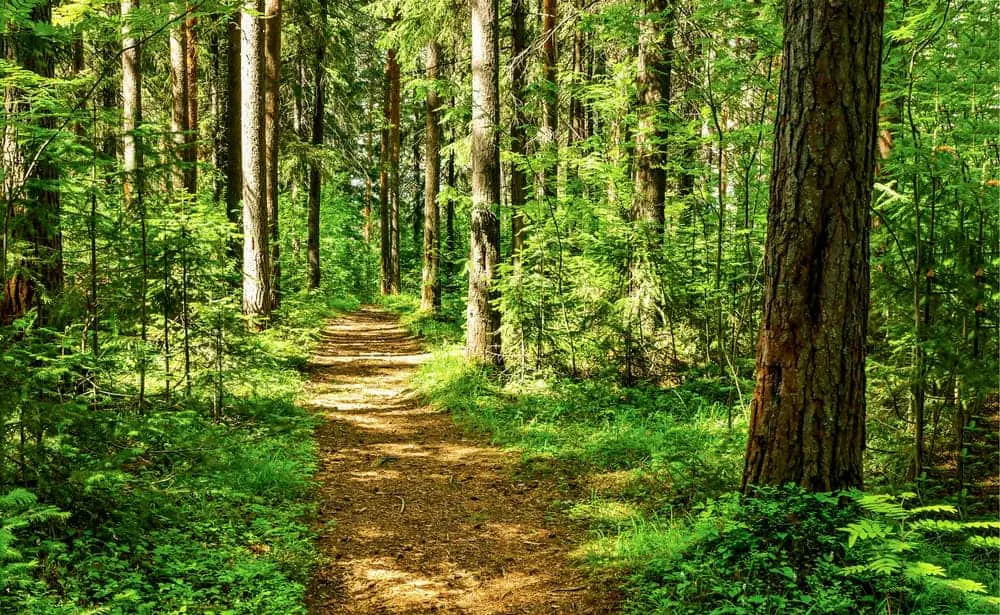
A forest trail framed with towering trees and lush greenery.

Forests are more than just magical places that provide the setting for fiction novels and spooky stories, and they cover more than a third of the earth’s surface. With more than three trillion trees making up the world’s forests, myriad living creatures call the forests home. Much more than that, though, is the fact that forests serve many vital purposes.

It’s easy to get confused by the different forest types globally, though, because they occur in so many different regions.

Forests can be broken down into tropical, temperate, and boreal types, with various sub-types according to climate, geographic location, seasonality, and leafing. Tropical forests have warm temperatures all year, while temperate forests experience four seasons with high and low temperatures. Boreal forests exist in predominantly icy regions.

Forests are defined in many different ways, and there are specific characteristics that can be used to differentiate between the types of forests. Let’s look at the broader categories that forests fall into and what sets them apart.

Table of Contents

The Forest Biome

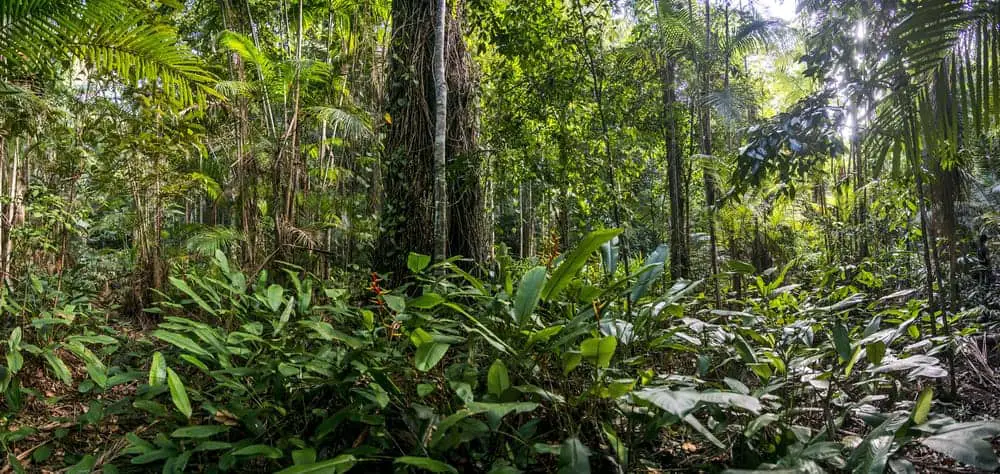
This is a forest landscape with palm trees, tree vines, and wild plants.

The term ‘forest’ has been used broadly to mean an area with a large number of trees, but it’s important to remember that a forest is not just a dense area of foliage. The word ‘biome’ is more accurate to describe forests because this takes into account that a forest is a naturally occurring community of fauna and flora – a functioning system of interconnected plants and animals that rely on each other for survival.

Characteristics For Classification

While there are many colloquial terms for forests, there are ways to differentiate between forest types by looking at their geographic location, climate, and what foliage grows there. As we will see, these factors all interlink. Here is a deeper explanation of how … Read the rest of the story.