Pages

Fox vs. Eagle

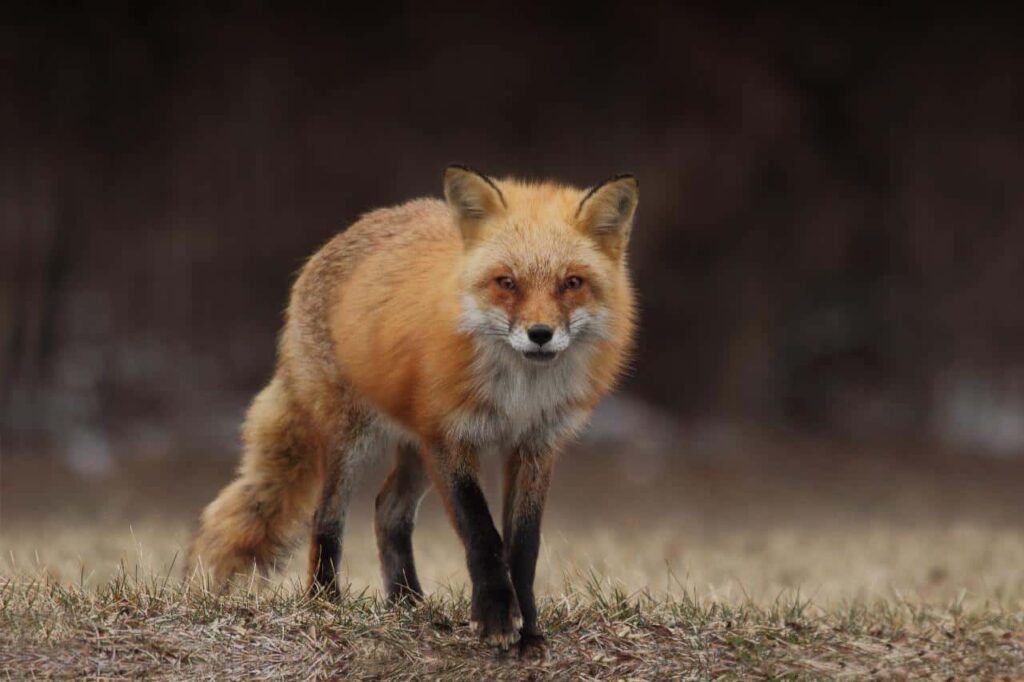
Close-up of a fox wandering in the middle of the field.

I read somewhere that eagles are admired worldwide for their symbol of freedom and power and that the fox is just a timid animal! But how would we compare fox vs. eagle?

Foxes are mammals and nurture their young in dens. They are omnivores feeding off vegetation and meat and are nocturnal animals who hunt at night. Eagles are birds of prey and raise their chicks in nests. They are carnivores living off fish and meat and are diurnal who hunt in the day.

The fox and the eagle are two very different species but do we know more interesting facts about how they raise their young, where they live, how they hunt, and their physical features!

Table of Contents

What are the Physical Difference Between the Fox and the Eagle?

An eagle spreading its wings.

The Fox

Foxes are mammals that are small to medium in stature.  The ears are upright and triangular, and the snout is slightly upturned. 

Foxes have bushy tails, and their pelts are denser in winter, thinning out once a year when they molt.  The colors are red, brown, or black.  They walk on their toes and have partially retractable claws.

The Eagle

Eagles are powerful birds of prey with strong muscular legs, powerful talons, and large hooked beaks. The body of an eagle is light in weight, allowing easy takeoff action, and is strong enough to swoop down to grab its prey and, still in flight, carry it to its feeding ground.

Eagles are excellent fliers, and their wings are remarkable; made from keratin, they are wide and reach a wingspan of over 8 feet long.

The eagle’s eyes are large and take up 50% … Read the rest of the story.


Coyotes: How Fast? How High Do They Jump?

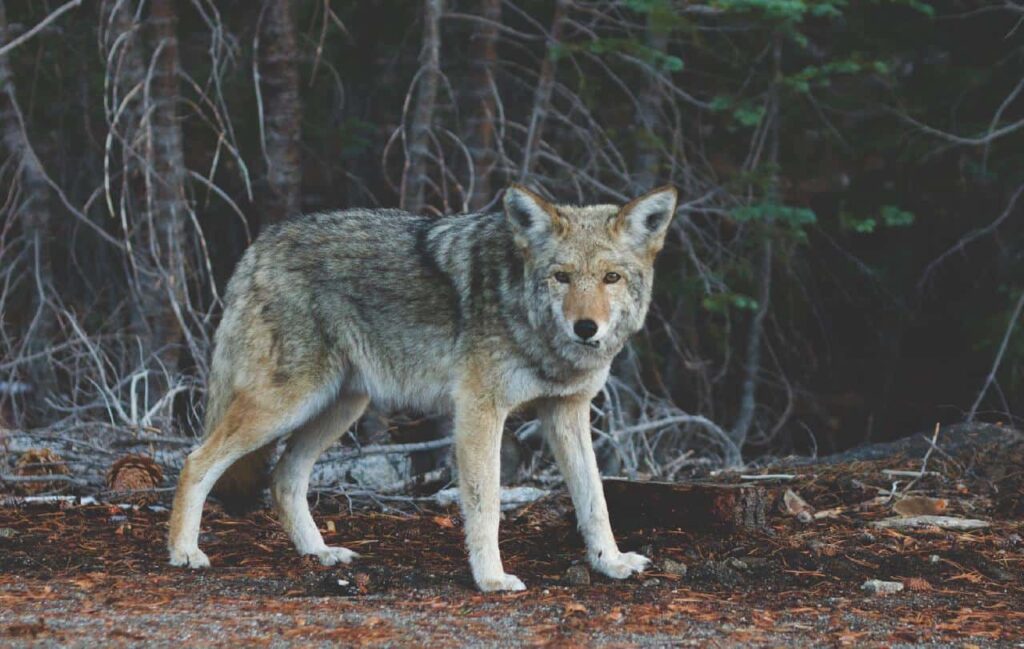
A coyote wandering in the forest.

Ever wondered if you could outrun a coyote or if your fence is high enough that one couldn’t jump over it? These are questions I’ve often wondered about myself, so I decided to research the matter and found some interesting information! So, how fast can coyotes run, and how high can they jump?

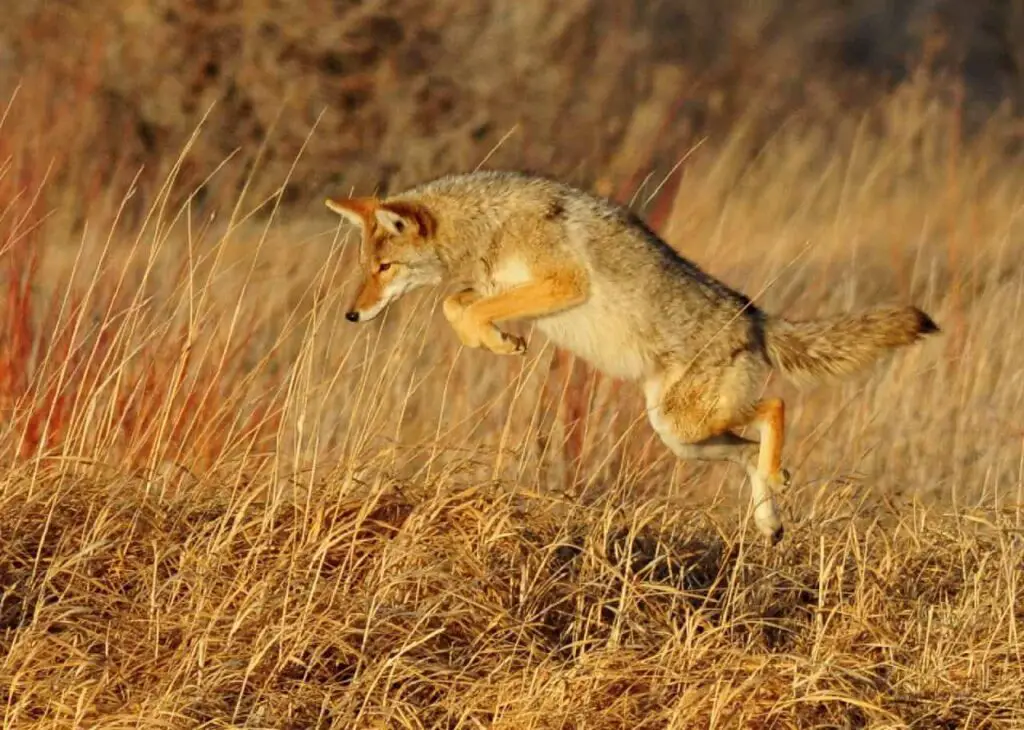
A coyote can reach a maximum speed of 43mph; studies on injured or crippled coyotes recorded maximum speeds of 32mph. They have been recorded to jump distances of 14 feet and over obstacles 8 feet high. They are also known to be able to climb 14-foot fences using their back legs.

Coyotes are found in most states in Northern America, from Canada down to Central America, and have spread into urban areas. Due to this, humans come into contact with them more often as they go about their daily lives. Now that we know that coyotes can run pretty fast and get over high obstacles, it’s a good idea to take a more informative look at coyotes’ speed and jumping abilities.

Table of Contents

How Fast Can Coyotes Run and How High Can They Jump?

A coyote jumping in the field.

How fast a coyote can run will depend on the age, health, and physique of the animal in question, it will also depend on the situation at hand. Is the coyote being chased, or is it hunting?

Studies conducted in 1976 by BC Thompson showed that crippled coyotes could reach speeds of just under 32 mph.

The test subjects were three injured coyotes caught in steel traps and, as a result, could not use one of their feet. The studies included releasing the injured coyotes, singularly, into a fenced-off area and then chasing them on foot. They might have reached higher speeds if they were chased by a car.

Uninjured coyotes can reach maximum speeds of 43 … Read the rest of the story.

Coyote Packs: How Big? How Do They Function Together?

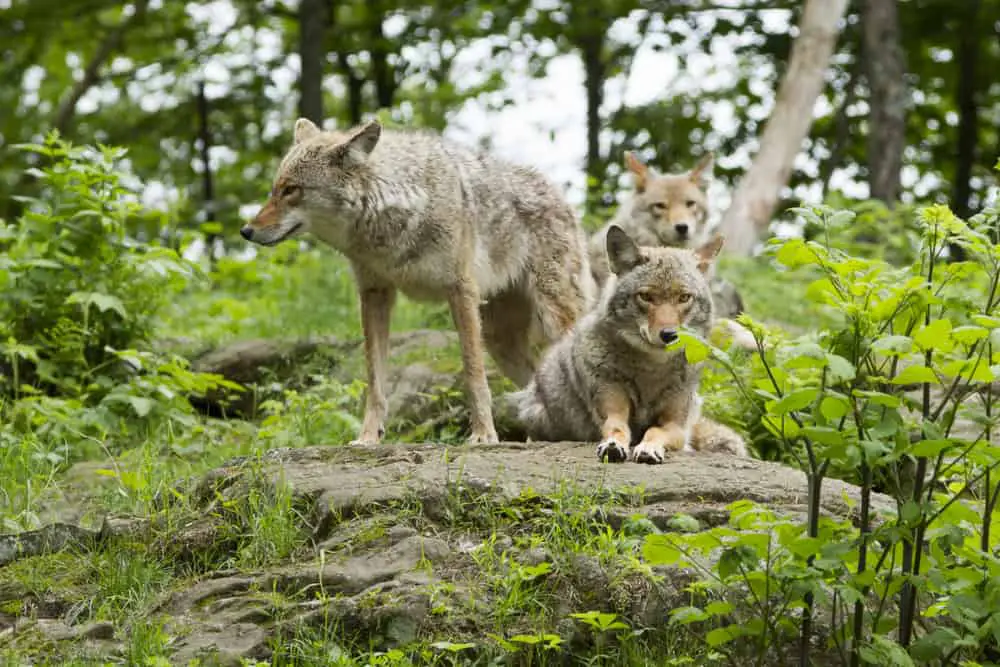
A pack of coyote sitting on rocks.

Coyotes live all across Northern America, up into Canada and down into Central America.

They are often seen wandering around singularly and in pairs. Hearing stories about coyotes and seeing them on TV has made me wonder about their pack-life. How big are coyote packs, and how do they function together?

Coyote packs are made up of an alpha male and female mated pair. The rest of the pack comprises close relatives, the alpha pair’s latest liter, numbering between 4 – 7 pups, and depending on the location, 3 – 4 other adults often encompassing individuals from previous litters. 

Knowing that coyote packs are made up of family members is just the tip of the iceberg. There is so much more information on how these pack members function together as a unit. Let’s delve deeper into the ins and outs of coyote packs.

Table of Contents

How are Coyote Packs Formed?

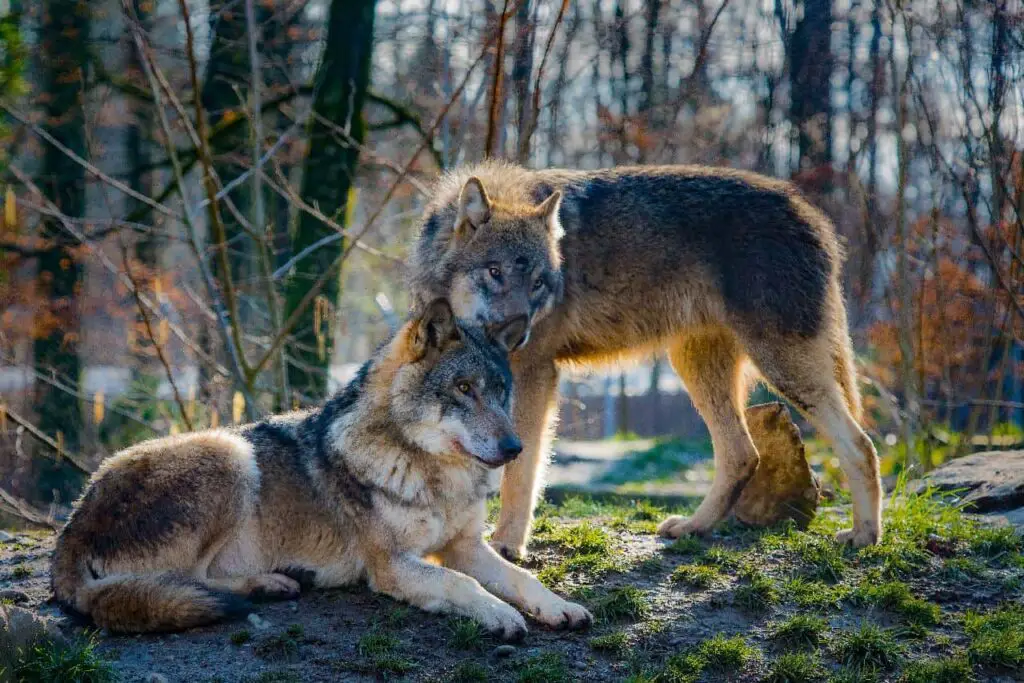
A couple of coyote in the middle of the forest.

Male and female coyote mated pairs are often monogamous, remaining together for many years. Once mated, the couple forms the basis of their pack, from where they produce their offspring, who in essence become the newest members of their pack. Mating season for coyotes is between January and March, and gestation lasts between 58 – 65 days, after which a female will bear between 4 -7 pups per litter.

During this time, the female coyote will make use of a den or underground burrow. In case of a flood, these dens are often found on a hillside with good drainage and a good vantage point to see any approaching danger. Females will dig a new burrow, use a previously dug burrow or take over other animals’ burrows, such as a badger hole.

The newest pack members are born blind and therefore stay in the den for up to 2 – 3 weeks before they venture outside to play and begin their life lessons. By weeks 5 – 7, the pups are … Read the rest of the story.

10 Different Types of Boa Constrictors

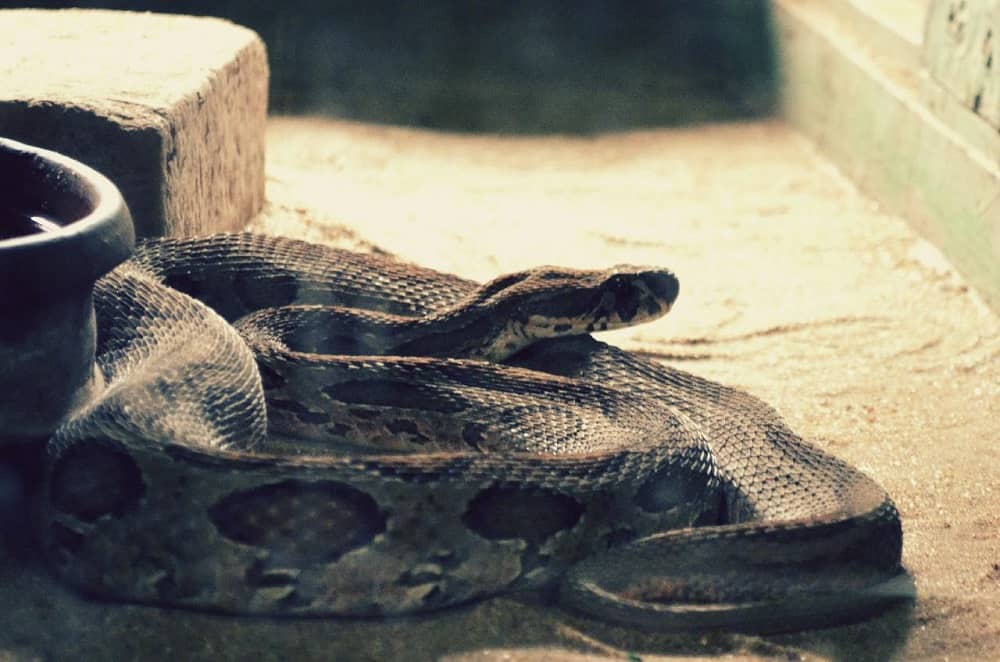
This is a boa constrictor coiled at a corner of its habitat.

In the world of snakes, Boas stand out from the crowd with their size and bulk, but the terminology used for these slithering giants can be somewhat confusing. While Boa is the scientific classification for several different families of snakes that kill by constricting their prey, Boa constrictors are their own specific species of Boa with various subspecies. In other words, a Boa constrictor is a type of Boa snake.

Boas are also not to be confused with Pythons. The main difference between these closely related snakes is reproduction, where Boas give birth to live young while Pythons lay eggs. Pythons are also referred to as old-world snakes being found across Asia, Africa, and Australia.

Boas can be found worldwide but are primarily concentrated in the Americas and therefore seen as new-world snakes.

There are currently ten types of Boa constrictors recognized in taxonomy; Amarai’s, Red-tailed, Northern, Tumbes Peru, Mexican, Dominican Clouded, Argentine, St Lucia, Orton’s, and the Pearl Island boa constrictor. Although similar, there are differences in appearance and adaptations across regions.

The differences and variations in these Boa constrictor subspecies are sometimes very subtle, but looking at their localities and unique physical markers will help you identify all the different Boa constrictors in your life.

Table of Contents

What is a Boa Constrictor?

This is a boa constrictor's head on a branch.

A boa constrictor is a large snake found from Central to South America and even on the Caribbean islands.

They are non-venomous snakes that kill by constricting their prey. For many years it was believed that the constriction was killed by suffocation, but new research has brought to light that the mechanism of death is the disruption of the circulatory system. The constriction cuts blood circulation … Read the rest of the story.

5 Different Types of Forests in Idaho

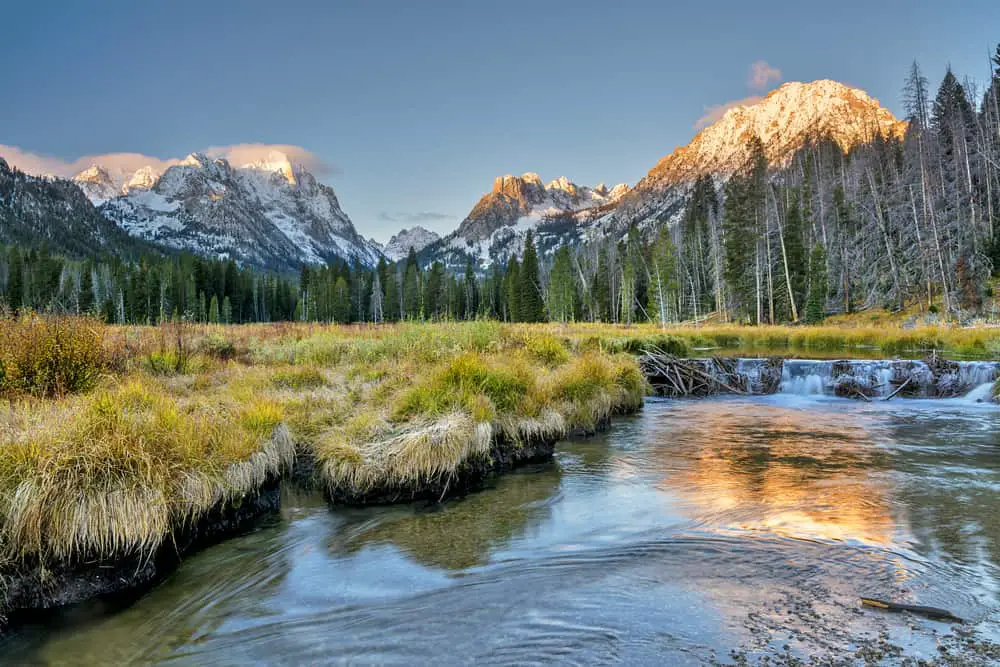
This is a landscape scenery showcasing the Idaho mountains, forests and a beaver dam.

If you’ve ever spent the night under a starry sky, you’ve truly lived. Camping is a favorite of my family because it makes us realize how small we truly are! Idaho has many such forests, and they offer sustenance, economic stability, and endless hours of leisure, each in their own way. So, what types of forests are there in Idaho?

Idaho consists of three forest types, divided by the north and south: Grasslands, Aquatic Wetlands, Desert Regions. They are all mixed-forests, so temperatures vary wildly, from 10 ºF (-8 ºC) to 70 ºF (25 ºC).  The fauna and flora are unique to each region, and each contains endangered species.

Forests each boast an ecosystem unique to themselves, and seeing how they all merge, is quite spectacular! Join me as I share many wonderful facts about Idaho’s forests and the role they play in sustaining the life that relies on them.

Table of Contents

Types Of Forests In Idaho

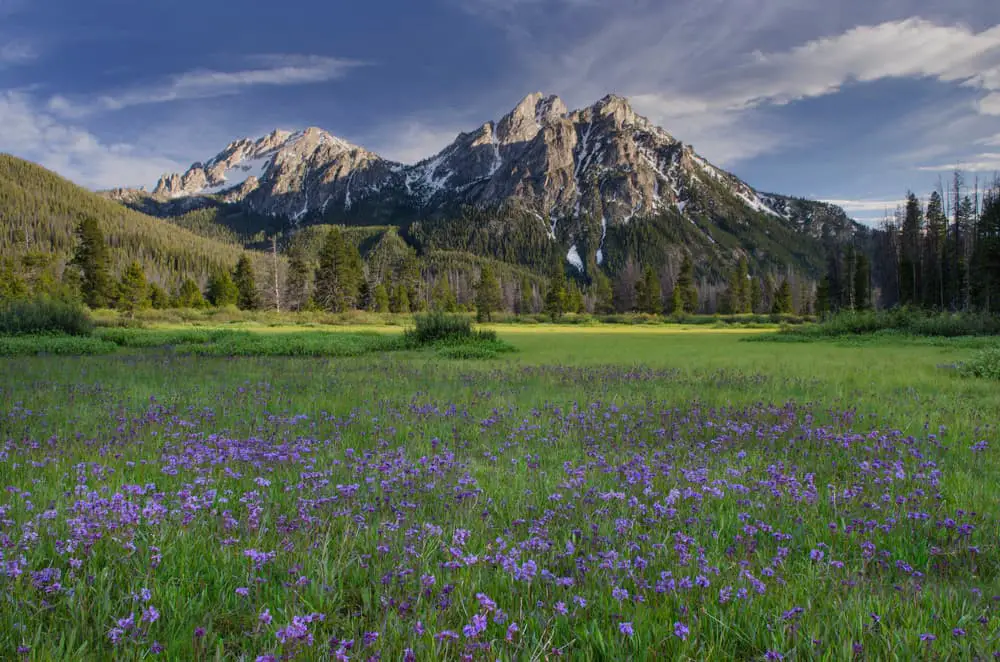
This is a view of the McGown Peak Sawtooth Mountains across from the flower and grass field.

Since all of Idaho’s forests are mixed forests, you would think they share similarities, but they are pretty different. The grasslands are located in the north of Idaho. Plants that inhabit this area are wheatgrass, wildflowers, and fescue. The Grasslands can be very windy due to the lack of trees numbering the landscape.

However, this is a boon for the flora because they use the wind to pollinate instead of insects. Temperatures are somewhere in the middle, never cold or scorching hot. Due to the lack of trees, mammals such as red foxes dig their own burrows to store food and rear their young because it is cooler.   

The Desert areas form part of … Read the rest of the story.


19 Different Types of Forests in Oregon

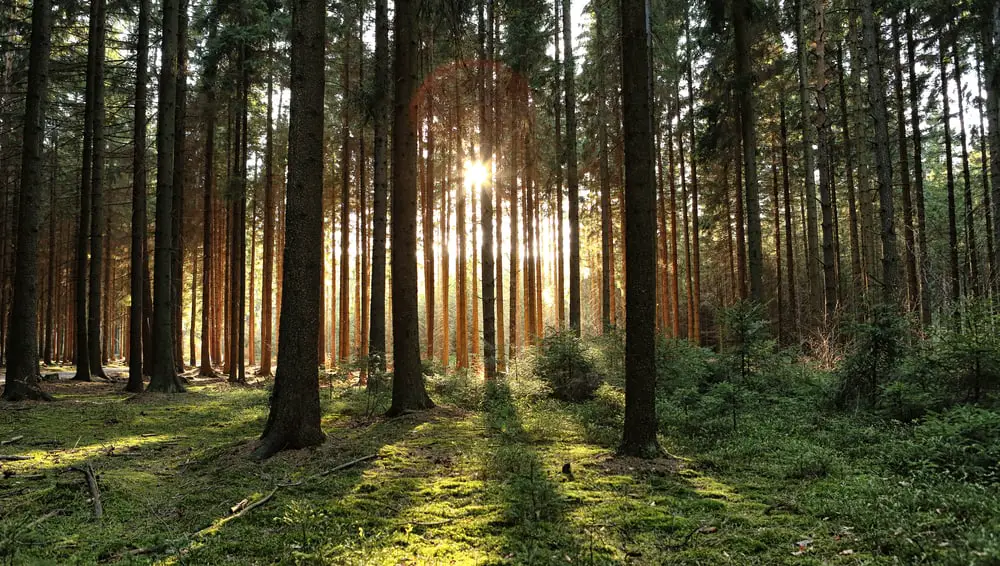
This is a close look at the sunlight rays through the dense pine forest.

Oregon is the ninth biggest state in size, with over 62 million acres. Over 2 percent of it is water, and nearly half (30 million acres) is forest. These forests are owned or run by a large number of organizations, the government, and citizens.

That’s a lot of trees. But what types of forests are there in Oregon? Are they all pine?

Coniferous trees make up 86 percent of Oregon’s forests. Douglas-fir is the most popular tree, making up 35 percent. Following are ponderosa pine, and Western hemlock.

Oregon’s hardwood forests cover around 3 million acres, and common trees are alder, maple, western oak, tanoak, and laurel.

Oregon is a diverse state in geography, climate, and thus, so are its forests and trees. Oregon has 67 native species, thirty of which are coniferous and 37 that are broadleaf. The denser forests are closer to the coast, while the arid climate of the semi-desert forces the trees to spread out.

The state hosts a mix of working forests and old growth.

Table of Contents

Who Owns And Manages Oregon’s Forests?

The estimated 2.7 billion tons of trees (alive and dead) are roughly spread out between the government (Federal, state, and local), Native Americans, land trusts and conversation groups, and private ownership (companies and individuals).

National Forests

The federal government has eleven national forests in Oregon, which make up around 25 percent of the state’s land. These national forests are a mix of working forests … Read the rest of the story.


3 Types of Forests in Saskatchewan

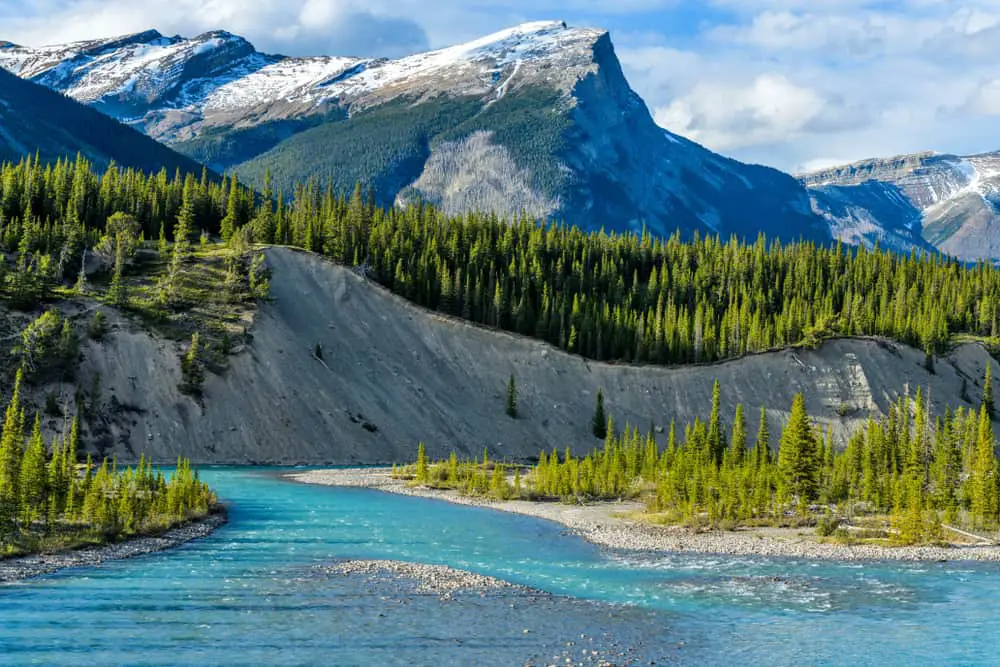
This is a view of the Saskatchewan River inside Banff National Park.

Known for its breathtakingly beautiful flat prairie landscapes, as well as its dunes and thousands of lakes, Saskatchewan is a paradise for those who love the outdoors! As someone who loves the outdoors, I know what it means to appreciate its impact on our daily lives. So, what type of forests exist in Saskatchewan?

Saskatchewan has four different types of forests: urban forests, agro-forests, commercial forests, and northern forests (nine forests). They provide cover from the prairie winds and the summer sun, improve the economy by planting trees for agriculture, give renewable resources.

Saskatchewan’s identity lies in its surrounding forests. They can give us some great insight into the lifestyle that locals choose to lead. Each forest is unique and serves a very special purpose that helps Saskatchewan thrive. Let’s take a deeper look at how Saskatchewan forests add infinite value!

Table of Contents

Types Of Forests In Saskatchewan

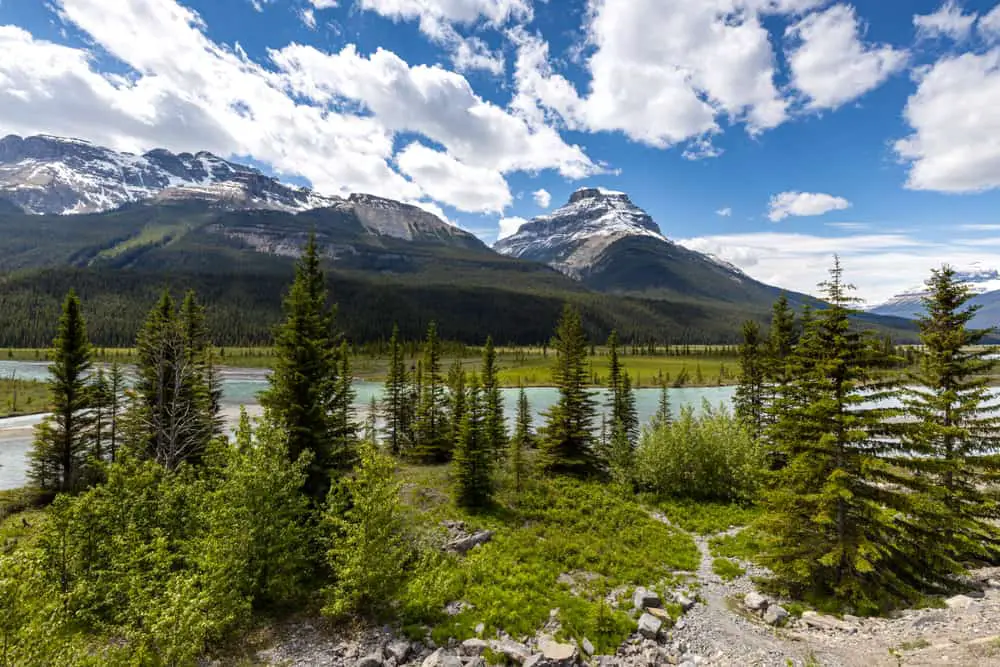
This is another look at the Saskatchewan river with a view of the rocky mountains.

Urban Forests in Saskatchewan is a huge boon for the locals! The vast majority of urban areas are plants grown by the residents who live there. Originally, there were few trees in the southern sections of the province to greet settlers due to the nature of the Prairies and the frequent fires, save in coulées and along river banks.

Cultivating agricultural products during the short growing season was a necessity. It was better to use existing wood for living purposes. The purpose of planting trees was to protect the prairie winds and the summer sun, resulting in the formation of an urban forest in each settlement.

Agro-forests have seen a lot of success in Saskatchewan. Agriculture … Read the rest of the story.