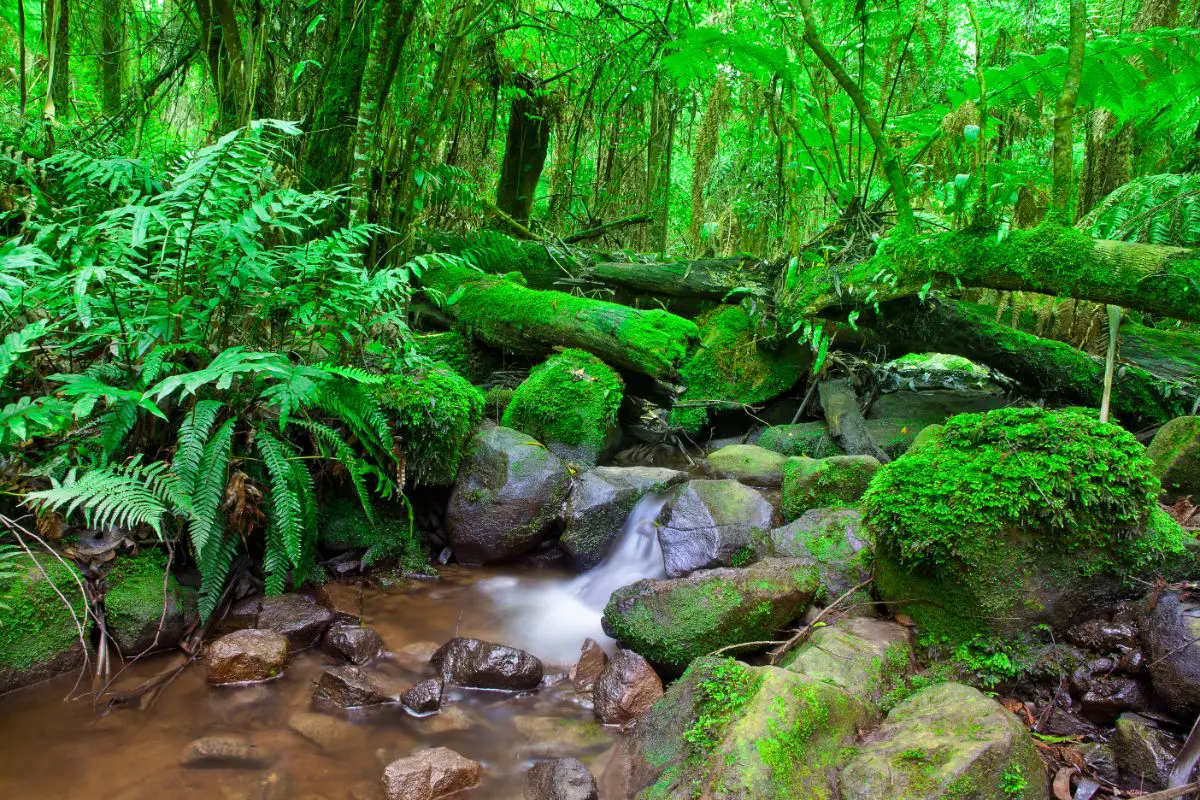
What is the youngest rainforest in the world?
Rainforests are the lungs of the earth. Tropical rainforests produce 40% of the Earth’s oxygen. Unfortunately, about half of the world’s tropical forests have disappeared as crops and animal farmland replace trees.
In the Amazon, the world’s oldest rainforest, illegal logging destroys 18.7 million acres of rainforest annually, or the equivalent of 27 soccer fields per minute. That’s why it’s pretty amazing that the world’s youngest rainforest…was built by humans on the top of a hotel the middle of a desert! Read on to find out more about rainforests and Rosemont Forest—the youngest member of the family.
What is a rainforest?
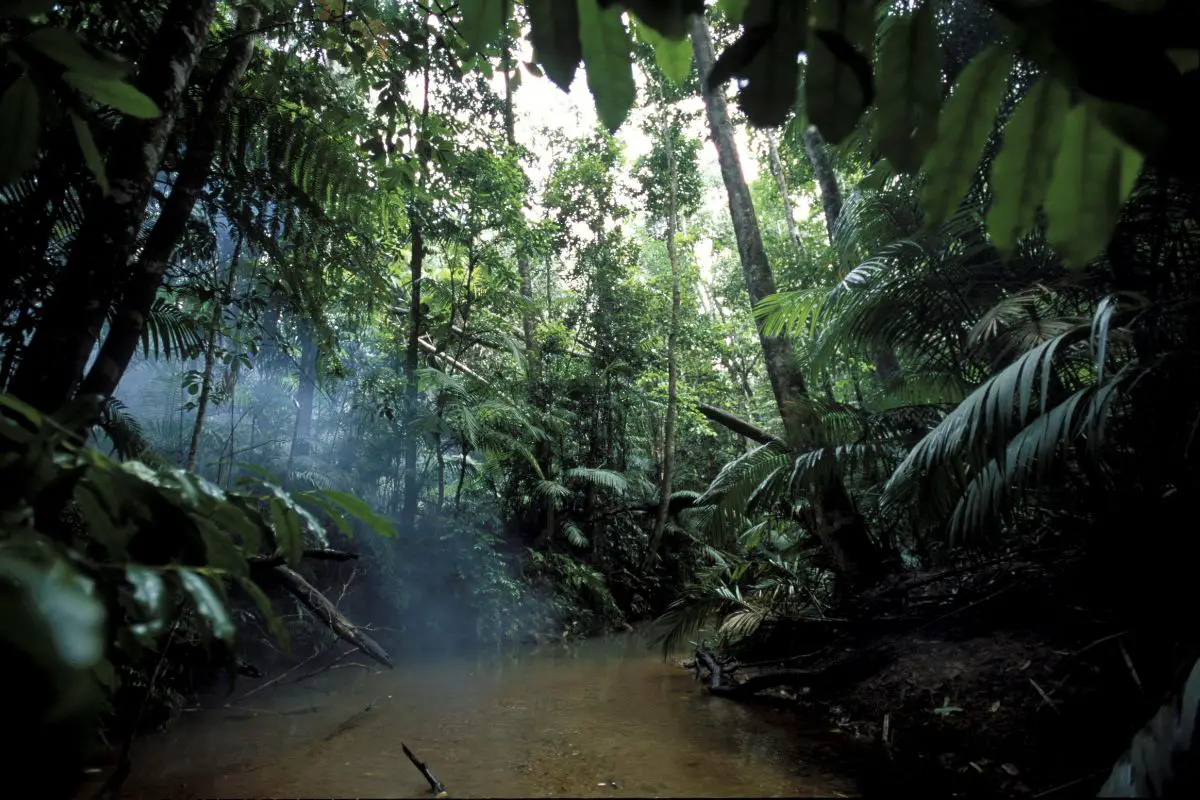
A rainforest is an area of tall, mostly evergreen trees that receives a high amount of rainfall. Earth’s oldest living ecosystems, some rainforests are 70 million years old! (That’s a lot of birthday candles!). These ancient forests are located on every continent except Antarctica.
They house an incredible diversity of lifeforms, many of which scientists think we haven’t even discovered yet. Each rainforest is characterized by a four-layer structure:
- Emergent
- Canopy
- Understory
- Forest Floor
Emergent
In the emergent layer, 200 foot trees reach for the sky, drawing water and sunlight in through their leaves and releasing seeds into the wind.
Canopy
The canopy layer blocks wind, rain, and sun with a thick layer of vegetation to create a humid, dark environment with plentiful sweet fruits that attract lots of animals and insects.
Understory
Full of dimly lit spaces and large, strong-smelling flowers, the understory provides a home to many endangered and familiar rainforest animals. Elephants, pythons, antelopes, and gorillas all live here, as well as camouflaged hunters like the spotted jaguar and the deadly green mamba.
Forest Floor
Leaves fall and decay on the forest floor, creating a rich environment for decomposers—termites, slugs, scorpions, worms, and fungi that break down decaying material into nutrients that feed the forest. Floor foragers like anteaters find insects and tubers in this layer, and in their turn feed predators.
Types of rainforests
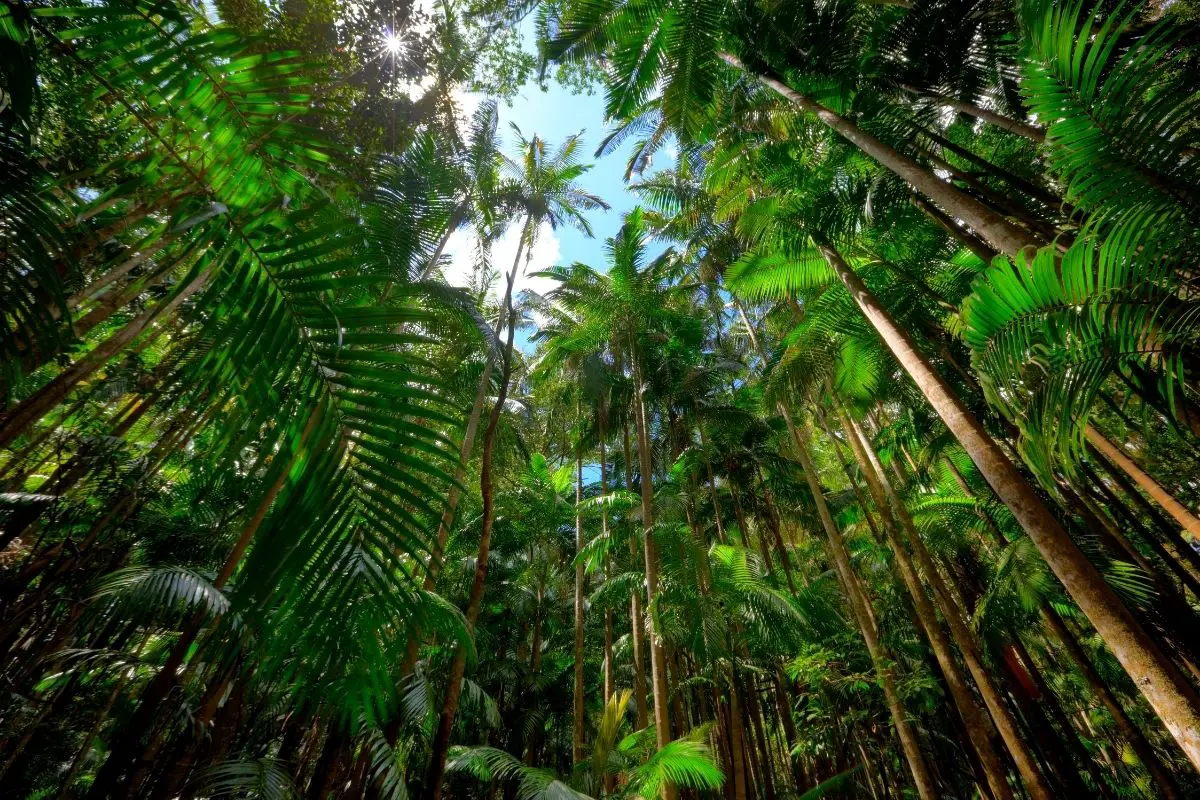
Rainforests can be tropical or temperate. They differ by location … Read the rest of the story.

No comments:
Post a Comment