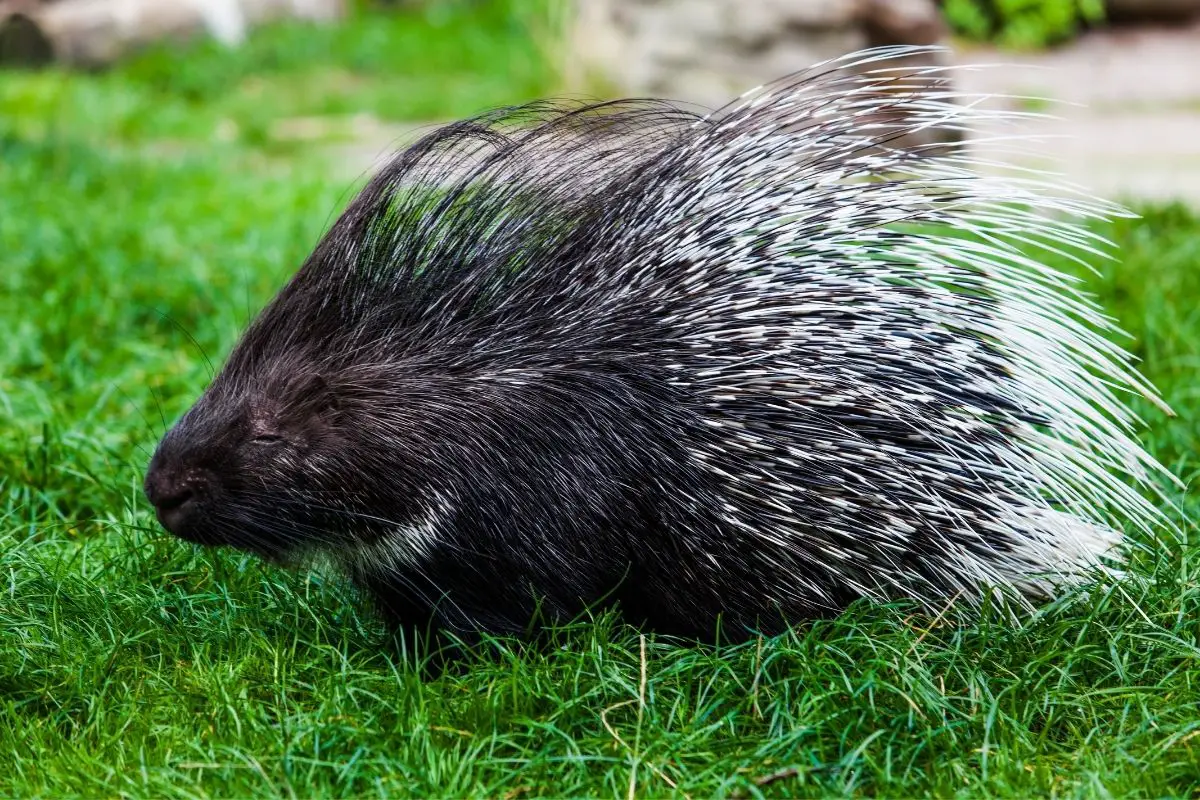
Porcupine quills are always growing. They are made of a material very similar to our hair and nails, so they would actually become way too long for the short, round little critter to navigate if old ones didn’t naturally fall out and grow back.
Porcupine quills are very interesting, so let’s take a look at how they work and how the porcupine doesn’t only use them for defense.
How Porcupine Quills are Structured
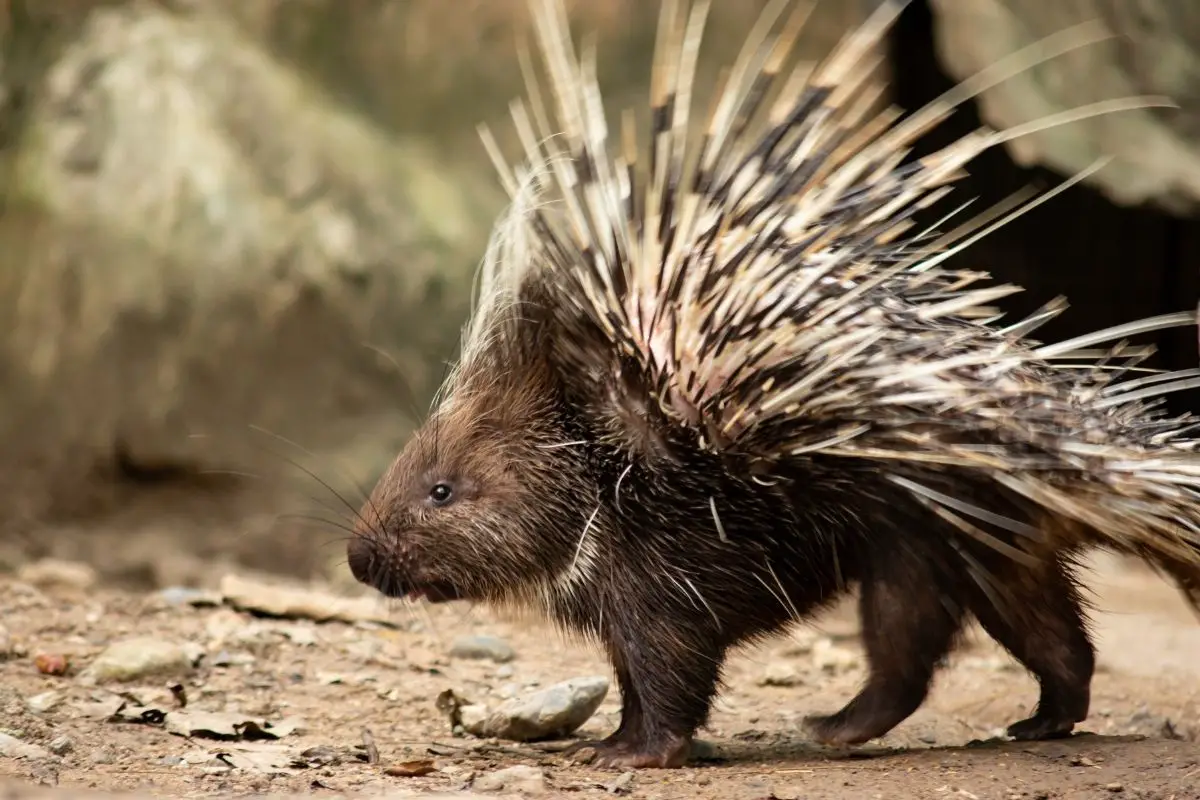
Porcupines are born with soft quills that harden within a few hours or days as the quills are exposed to air. The quills are actually modified hairs that are covered with keratin, much like human nails. They are loosely attached to the back, legs, and tail and are mixed with underfur, bristles, and guard hairs.
Each quill consists of 700-800 minute overlapping barbs that work like fish hooks when they attach to the skin. Different breeds of porcupines have different sized quills with the longest being a foot long! The porcupine has over 30,000 of these at any given time.
When the quills come into contact with something, they attach to the object and the backwards barbs keep them from falling out. As time goes on, they continue to work their way deeper into the flesh and can cause infection. The quills can sometimes embed themselves at a rate of one inch per day.
The quills are mainly hollow. Because of this, the porcupine is able to float on water. Not all porcupines like to swim, but many enjoy the ability to eat in peace, away from predators and they enjoy the delicacies of water plants they can’t find on land.
Not the First Line of Defense
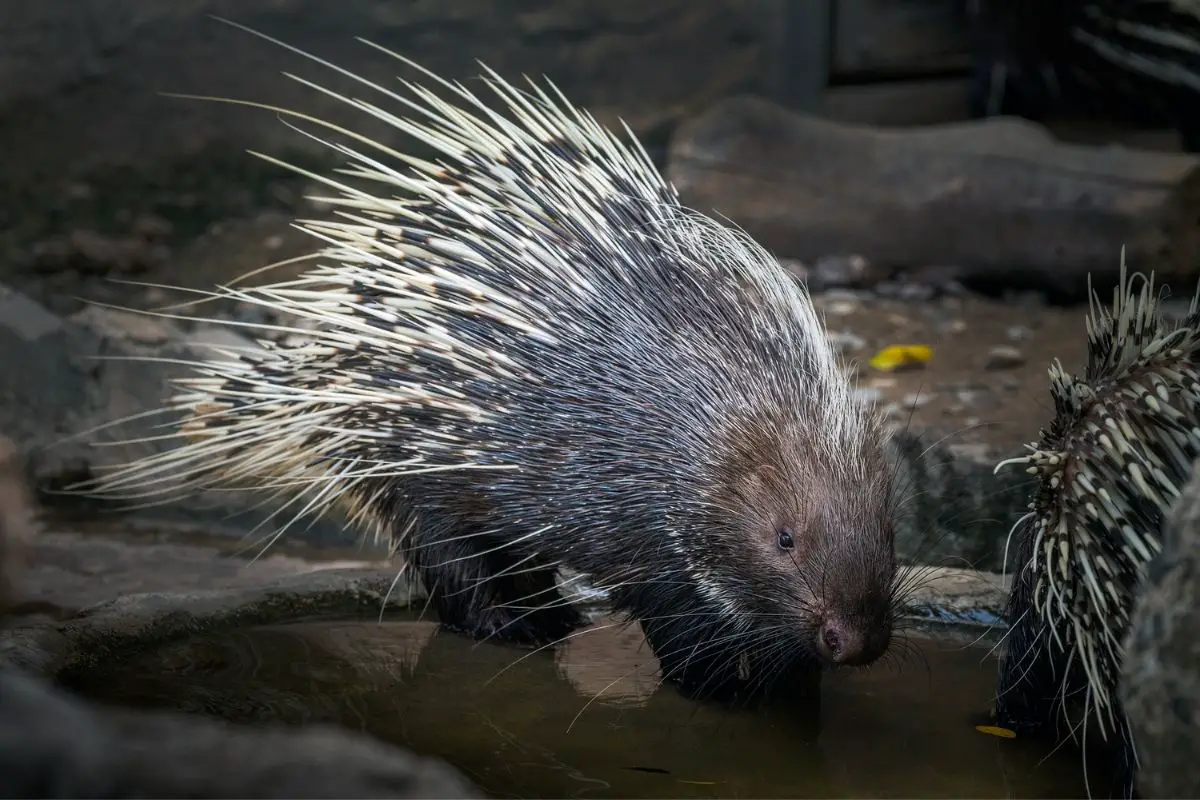
The gentle porcupine doesn’t automatically attack with its quills. They will try to waddle away, but are often much slower than whatever is bothering them. The porcupine’s quills normally lie flat and muscles just under the skin allow him to raise them straight up.
Often, this will make him look two to three times his normal size. The little animal will then make a chattering noise by vibrating his … Read the rest of the story.

No comments:
Post a Comment