The smallest animal living in the Amazon Rainforest is a small canopy jumping monkey known as the pygmy marmoset. Also known as the dwarf monkey, thumb monkey, or pocket monkey, this tiny creature can move up to 12 miles per hour and be highly aggressive. However, the pygmy marmoset’s appearance makes it seem cute.
The Amazon Rainforest is home to more than 427 mammal species, newly discovered each year. For now, the pygmy marmoset is the smallest known mammal living in the Amazon forest. I’ve always wondered what these tiny creatures were like as their videos popped up online.
They always seem cute and pet-like, making them enjoyable to learn about. So, I’ll teach you what I’ve learned about this species and how they survive the harsh Amazon Rainforest.
What is the Pygmy Marmoset?

The Pygmy Marmoset belongs to the Cebuella genus family and is native to the rainforests of the western Amazon Basin located in South America. It’s one of the smallest primates and weighs just over 100 grams. As a comparison, they weigh similar to that of a soap bar.
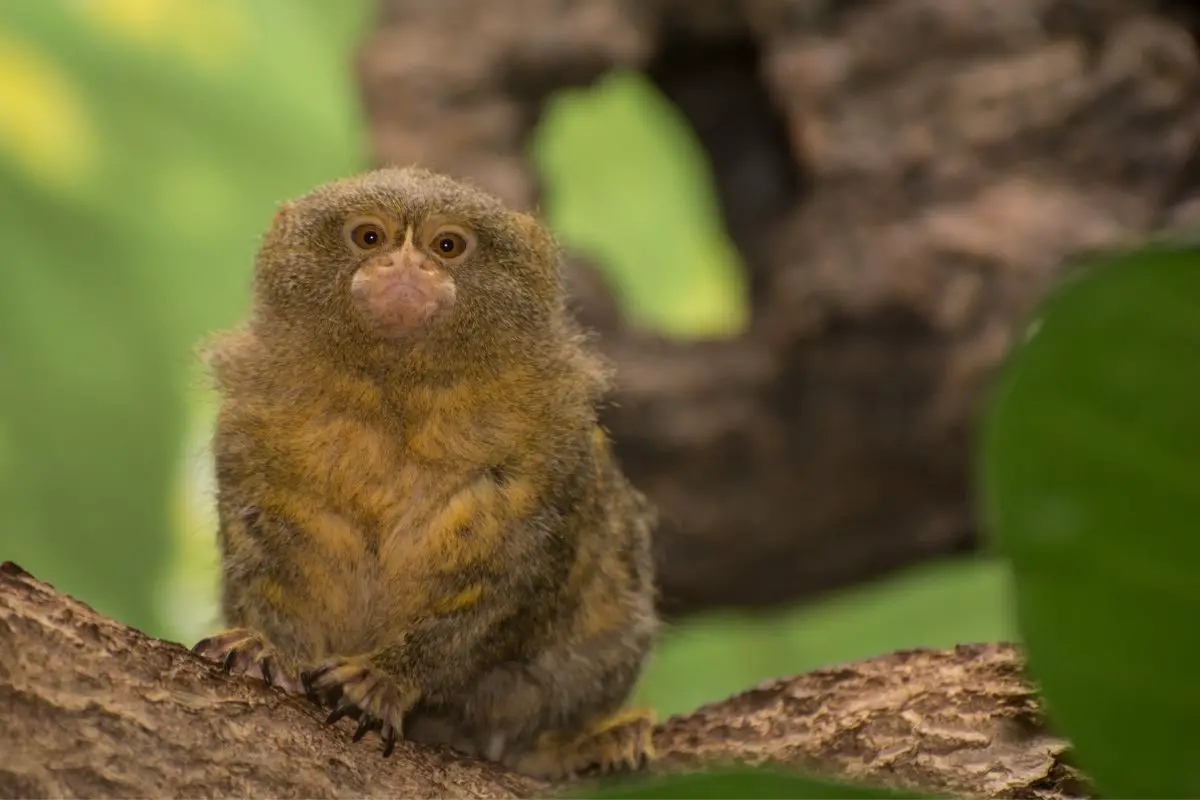
Its physical stature includes a head-body length up to 152 mm and a long tail that extends up to 229 mm. The Pygmy Marmoset also has a fur color of brownish-gold, grey, and black and may have species of yellow, orange, and tawny underparts. Some standout characteristics include a black ring around its tail, a face with white flecks, and a vertical line between its eyes.
Another characteristic that sets this monkey apart is that it’s been adapted to survive the harsh environment. One adaption is that it can rotate its head up to 180-degrees, which can help it stay alert.
Aside from that, the Pygmy Marmoset has sharp claw-like nails called tegulae that help it cling to trees and also collect food. These claws are similar to insect-like claws and can be used for claw-clinging behaviors and foraging.
Lastly, the small monkey possesses enormous strength and can leap up to 16 feet from branch to branch.
Pygmy Marmoset Behavior
The Pygmy Marmosets often live in … Read the rest of the story.

No comments:
Post a Comment